Bangles vs Bracelets: Which Style Lasts Longer and Holds More Value?
If you are choosing between a bangle and a bracelet, you are really choosing between two ways a piece sits on the wrist, and that choice affects how long it lasts, how comfortable it feels, and how often you wear it. A bangle is a rigid, usually closed circle that slides over the hand; a bracelet is a flexible band with a clasp. They both decorate the wrist, but they behave very differently in daily life. This guide compares them honestly: durability, comfort, care, cost, style, and which gives more long-term wearable value. We make both in Wuzhou, so we can tell you the trade-offs without pushing one.
The short version is that bangles win on simplicity and timelessness, while bracelets win on security and versatility. A well-made bangle has no clasp to fail and a clean, elegant look, but it can dent, slide, and clink. A flexible bracelet stays put and comes in endless designs, but it has a clasp that can wear and links that can fail. Which is better depends on your wrist, your lifestyle, and what you want the piece to do. We will walk through each angle so the choice is clear.
We will cover the structural difference, how each wears over time, comfort and fit, care and cleaning, cost and value, styling, and who should choose each. By the end, you should know whether your wrist wants a smooth sliding bangle or a clasped flexible bracelet, and you will understand why both styles have survived for so long.
The Structural Difference
A bangle is rigid. It is a solid circle of metal that does not flex, and it goes on by sliding over the widest part of your hand. Because it is solid, it has no moving parts: no clasp, no links, no hinges. That simplicity is its strength. There is nothing to open, nothing to break, and nothing to wear out. A well-cast silver bangle, treated reasonably, can last for decades with almost no maintenance. We cover the range in silver bangle styles.
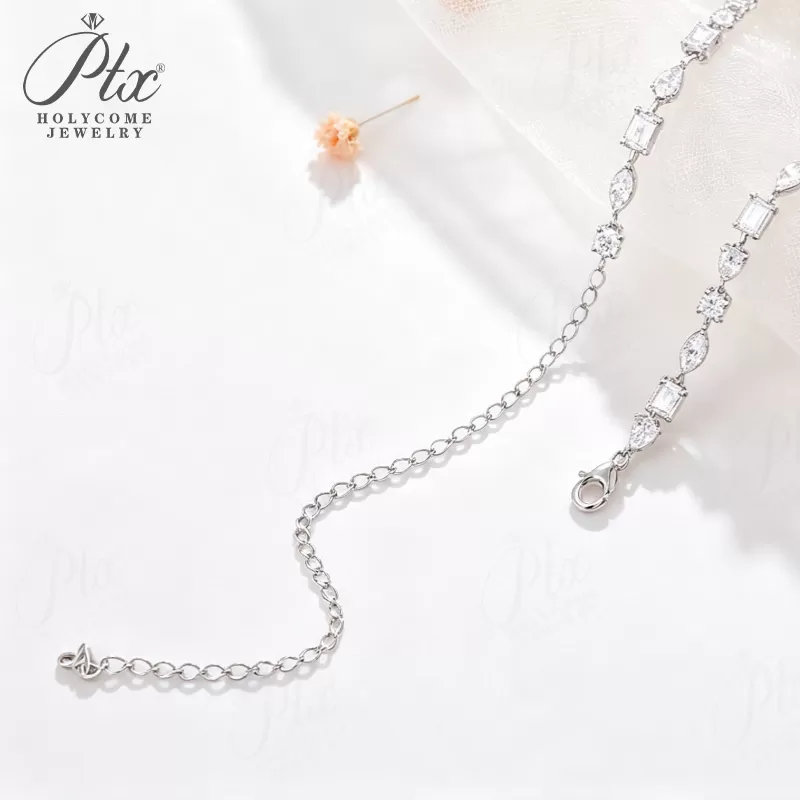
A bracelet is flexible. It is made of links, stones, or a chain that bends around the wrist, and it closes with a clasp. That flexibility lets it fit closely and move naturally, but it introduces weak points: the clasp, the links, and any stone settings. Each of these can wear or fail over time. The trade is that a flexible bracelet conforms to the wrist and offers far more design variety, from tennis styles to charms. We cover the range in chain bracelet link types.
The structural difference shapes everything else. A bangle's simplicity means it either stays whole or dents; it does not slowly loosen or drop stones. A bracelet's flexibility means it adapts to you but accumulates wear at the joints. Think of a bangle like a sturdy cup and a bracelet like a flexible band. One is solid and unchanging; the other moves with you but has seams. Which you prefer is partly about temperament, and partly about your daily habits.
How Each Wears Over Time
A bangle ages by denting and scratching. Because it is a rigid circle worn on a moving wrist, it knocks against desks and door frames, and over years it collects small dents and surface scratches. A thin bangle can even bend out of round if knocked hard. But it never loses a stone, never pops a clasp, and never comes apart. Its wear is cosmetic, and it can be polished and reshaped. A well-made, reasonably thick bangle patinas gracefully. We discuss styles in bangle styles.
A bracelet ages by wearing its moving parts. The clasp loosens, links stretch, and stone settings can weaken. Its wear is functional, which is riskier: a worn clasp can lose the whole piece, and a loose stone can fall out. But a flexible bracelet dents less, because it gives instead of absorbing a blow. A thin chain bends rather than dents flat, and a tennis bracelet flexes rather than cracking. Each style fails in its own characteristic way, and knowing that helps you protect it. We cover clasp risk in clasp failure.
For pure longevity of the whole piece, a sturdy bangle is hard to beat, because it has no failure points. For versatility, a flexible bracelet wins, because it does more things. If you want a piece you can almost forget about and it will still be intact years later, a solid bangle delivers. If you want a piece that adapts to many looks and moments, a flexible bracelet earns its keep. Neither is fragile if built well; they just age along different paths.
Comfort and Fit
Fit is where the two styles feel most different. A bangle must pass over your hand, so it is necessarily looser than the wrist, and it slides up and down as you move. Some people love that sliding movement; others find it annoying. A bangle also clinks against surfaces, which some hear as a pleasant rhythm and others find distracting. A flexible bracelet fits closely and stays put, which many people find more comfortable for all-day wear. We cover sizing in bracelet sizing.
For small wrists, a bangle can slide too far and feel loose, while a fitted bracelet stays exactly where you put it. For larger wrists, a bangle must be big enough to pass over the hand, which can leave it feeling loose. A flexible bracelet is adjustable to the wrist size, which makes it more precise. If you value a snug, secure fit, the bracelet usually wins; if you like the free movement of a sliding bangle, that is its charm.
Comfort also depends on how you work. If you type or rest your wrists on a desk all day, a clinking sliding bangle can annoy, and a smooth fitted bracelet glides. If your day is more relaxed, a bangle's movement adds charm. Try both on and notice how they feel after ten minutes. The bracelet you forget you are wearing is the one you will keep on, and that comfort decides which style actually delivers daily value.
Care and Cleaning
Caring for a bangle is simple. It polishes clean with a cloth, and any tarnish wipes away. Because it is a solid smooth surface, there are no crevices to trap dirt, and no clasp to check. A bangle is the low-maintenance option: wear it, wipe it, polish it now and then, and it stays bright. It dents, but dents are cosmetic and can be reshaped by a jeweler. We cover the routine in bracelet care guide.
Caring for a flexible bracelet is more involved. A tennis bracelet needs occasional prong checks, a charm bracelet has crevices to clean, and a chain needs its clasp inspected. The more moving parts, the more maintenance. A flexible bracelet is not high-effort, but it is not the set-and-forget that a bangle is. If you prefer minimal jewelry care, the bangle is the easier relationship. We cover tennis upkeep in tennis bracelet value.
Storage also differs. Bangles scratch each other when tossed together, so store them separately or padded to avoid surface marks. Chains tangle, and tennis bracelets bend. Each style has its own storage quirk, but the bangle's is simpler to manage: keep it apart from other bangles, and it stays smooth. A flexible bracelet needs its own compartment to prevent tangling and bending. Match the storage to the style, and both last longer.
Cost and Wearable Value
Cost-wise, both can be excellent value, but they spend your money differently. A bangle's price is mostly the silver weight and casting, with no stones or settings to add. A flexible bracelet's price depends on its design: a simple chain is cheap, a tennis bracelet costs more for its stones and setting. For affordable everyday value, a well-made silver bangle is one of the most durable pieces you can buy for the price. We cover pricing in wholesale bracelet pricing.
Wearable value favors whichever style you actually wear. A bangle you forget about, worn daily for years, is exceptional value per wear. A flexible bracelet you love and style in many ways is also excellent. The mistake is buying a bangle style that annoys you with its sliding and clinking, or a flexible bracelet too delicate for your lifestyle. Match the style to how you live, and either one becomes good value. Resale is low for both, as we cover in do silver bracelets hold value, so buy for wearing, not flipping.
For building a collection, they complement each other. A bangle adds a clean, timeless line; a flexible bracelet adds texture, stones, or charms. Many people own both and mix them: a smooth bangle stacked with a thin chain. The two styles do not compete; they layer beautifully. Start with whichever matches your default style, and add the other over time. That combination covers both the solid look and the flexible look, and you will reach for them on different days.
Styling: The Different Looks They Create
A bangle and a bracelet create different visual effects, and your wardrobe should guide the choice. A bangle draws a clean, continuous circle on the wrist, which reads as minimalist, modern, and elegant. It pairs beautifully with blouses, tailored sleeves, and simple outfits, adding a polished line without fuss. Stack a few thin bangles and the look becomes structured and deliberate. We cover the aesthetic in bangle styles. The bangle is the choice for clean-lined, put-together dressing.
A flexible bracelet draws attention to detail. A tennis bracelet brings sparkle, a charm bracelet brings personality, a chain brings texture. These styles work with casual, layered, or eclectic wardrobes, where the wrist tells a story. A flexible bracelet reads as collected and personal rather than minimal. If your style leans toward mixing pieces and expressing yourself, the flexible bracelet suits that energy. We cover stacking in stackable sets.
The two can also be combined. A smooth bangle as an anchor, with one delicate chain or a thin tennis bracelet beside it, creates a layered but orderly wrist. This is one of the most flattering modern bracelet combinations, because the bangle provides structure and the flexible piece provides interest. You do not have to pick one forever; building both lets you style the wrist for any outfit. Start with whichever look you reach for most, and add the other over time.
Who Each Style Suits Best
Choose a bangle if you prefer minimalism, low-maintenance wear, and a clean elegant line. It is especially suited to people who dislike fussing with clasps, who want something they can slide on and forget, and whose style leans modern or classic. It is also a strong gift choice, because a bangle is universally flattering and has no clasp to worry about. We cover gifting in the gift guide.
Choose a flexible bracelet if you want sparkle, personalization, or versatility. A tennis bracelet suits someone who wants glamour; a charm bracelet suits someone building meaning; a chain suits someone who layers. It is also the better choice for anyone whose wrists are hard to size, because a flexible bracelet adjusts. Match the flexible style to what you want to express, and it becomes a piece you style deliberately rather than a simple line.
If your lifestyle is hard on jewelry, a sturdy, reasonably thick bangle often survives better than a delicate flexible bracelet, because it has no clasp to pop and no stones to loosen. But a simple chain bracelet is also tough, and dents less. Avoid delicate stone-set flexible pieces if you work heavily with your hands. Match the sturdiness to your day, and either style stays wearable for years. We discuss build quality in quality assessment.
The Cost-per-Wear Comparison
Judged by cost per wear, both styles shine, but in different rhythms. A bangle you slide on every morning and wear for years costs very little per wear, because it needs almost no maintenance and never fails. It is the lowest-effort way to own a piece of silver you actually use. A flexible bracelet, especially a stone-set one, costs a bit more and needs occasional care, but if you style it often, the per-wear cost still drops fast. We discuss the lens in do silver bracelets hold value.
The mistake to avoid is buying a flexible bracelet too delicate for daily use, then hiding it away. A rarely worn delicate piece has a high cost per wear, no matter how beautiful. Similarly, buying a bangle style you will be annoyed by means it sits in a drawer. The value lives in how often you reach for it. Be honest about your habits, and buy the style you will actually live in.
For budget stretching, bangles are unbeatable starters. A well-made silver bangle costs modestly and lasts years, making it one of the most affordable ways to own real silver jewelry you wear constantly. Flexible stone pieces cost more, but they deliver glamour a plain bangle cannot. Many people start with a bangle for daily wear and add a flexible statement piece for occasions. That split gives you both durability and glamour, without overspending on either.
Sizing a Bangle Versus a Bracelet
Sizing works differently for the two styles, and getting it wrong is the most common reason people dislike their piece. A bangle must be large enough to slide over your knuckles, which means it will always move on the wrist. Measure the widest part of your hand, when your thumb and little finger are brought together, and choose a bangle just large enough to pass over comfortably without falling off. If it slides off when your hand is flat, it is too loose. We cover this in bangle sizing. A well-sized bangle moves, but stays on.
A flexible bracelet is sized to the wrist itself. Measure your wrist snugly and add a small amount for comfort. A bracelet that fits the wrist sits securely and does not slide over the hand, which is why it feels more controlled. If you measure a flexible bracelet the way you would a bangle, it will be far too loose. The two measurements are different, and using the wrong one causes most fit problems. We detail this in bracelet size guide.
When in doubt, size a flexible bracelet slightly snug rather than loose, because a secure fit prevents loss. For a bangle, err on the side of just big enough to remove comfortably, because one that is hard to take off gets avoided. Getting the fit right is worth measuring carefully, because it directly determines whether you wear the piece constantly or leave it in a drawer. A well-fitted bangle or bracelet is the one you reach for daily.
Repair and Reshape: What Each Needs Over a Lifetime
Over a long life, the two styles need different repairs. A bangle that gets dented or bent out of round can be reshaped by a jeweler, and deep scratches polished out. Its repairs are about restoring form, and because there are no moving parts, those repairs are simple and inexpensive. A well-made bangle can be reshaped and replated many times, effectively renewing it. This repairability is a quiet part of its long-term value: the piece can be brought back to like-new for a modest cost, again and again.
A flexible bracelet needs functional repairs. A worn clasp is replaced, a stretched link soldered, a loose stone re-set. These repairs are also common and affordable, but they address parts that can fail rather than dents. A tennis bracelet that loosens a prong needs prompt attention before a stone falls out, as we cover in tennis bracelet value. Over decades, a flexible bracelet may need a clasp replacement or two, which keeps it safe to wear. Neither style is disposable if you repair it.
Because both are repairable, the choice is not about which survives untouched. It is about which kind of upkeep suits you. A bangle needs occasional reshaping and polishing; a flexible bracelet needs occasional clasp and setting checks. Budget a small amount over the years for a jeweler, and either style lasts a very long time. The silver itself is durable, and with basic repairs, a well-chosen piece stays wearable for decades. That longevity is the real value both styles share.
Frequently Asked Questions
Do bangles or bracelets last longer? A sturdy bangle has no clasp or links to fail, so it lasts as an intact object, though it can dent. A flexible bracelet is more design-versatile but has clasp and settings that wear. Both last decades if well made and cared for.
Which is more comfortable? A fitted flexible bracelet stays put; a bangle slides and clinks. Preference varies. Try both on for a few minutes to see which you forget you are wearing.
Which needs less care? A bangle is the lowest maintenance: polish and store it separately. A flexible bracelet needs occasional clasp and setting checks, especially if it has stones or charms.
Can I wear both together? Yes. A smooth bangle stacks beautifully with a thin chain or a delicate tennis bracelet. They complement rather than compete, which is why many people own both.
Pick the Style That Matches Your Wrist
Bangles and bracelets are two great ways to adorn a wrist, and the honest answer is that both hold real wearable value when built well. Choose a bangle if you love simplicity, a clean sliding line, and low-maintenance elegance. Choose a flexible bracelet if you want security, design variety, stones, or charms that move with you. The best choice is whichever you will wear without thinking, because a piece worn constantly beats a piece admired in a drawer. Know your wrist and your habits, and the decision makes itself.
We make factory-direct sterling silver bangles and flexible bracelets in Wuzhou, built to last. Contact us at service@holycome.com for styling help or wholesale pricing. Read more in silver bangle styles, and see the range in the bracelets category.