Lab Grown Diamonds Wholesale CVD HPHT
A New York City jewelry brand started buying lab grown diamonds wholesale in 2023 for their engagement ring program. Their first supplier quoted 1.0ct D VS1 at $180 per stone—well below the $280-350 market range— and shipped 200 stones that graded F-G SI on receipt, with 14 stones showing visible brown tint under daylight and 8 stones with IGI reports where the laser inscription did not match the stone under loupe. The brand lost $22,000 on that parcel and three weeks of production time. The lab grown diamond wholesale market is efficient and transparent, but only for buyers who know how to verify grading, provenance, and certification.
A New York City jewelry brand started buying lab grown diamonds wholesale in 2023 for their engagement ring program. Their first supplier quoted 1.0ct D VS1 at $180 per stone—well below the $280-350 market range— and shipped 200 stones that graded F-G SI on receipt, with 14 stones showing visible brown tint under daylight and 8 stones with IGI reports where the laser inscription did not match the stone under loupe. The brand lost $22,000 on that parcel and three weeks of production time. The lab grown diamond wholesale market is efficient and transparent, but only for buyers who know how to verify grading, provenance, and certification.
This guide explains how to buy lab grown diamonds wholesale from a reliable supplier: CVD vs HPHT growth methods, the 4Cs applied to lab grown stones, certification (IGI and GCAL), pricing by size and grade, MOQ tiers, calibration for jewelry production, lead times, and what to inspect before buying bulk. Whether you are a retail jeweler, DTC brand, custom designer, or manufacturer building lab grown diamond jewelry, this guide covers what you need to know.
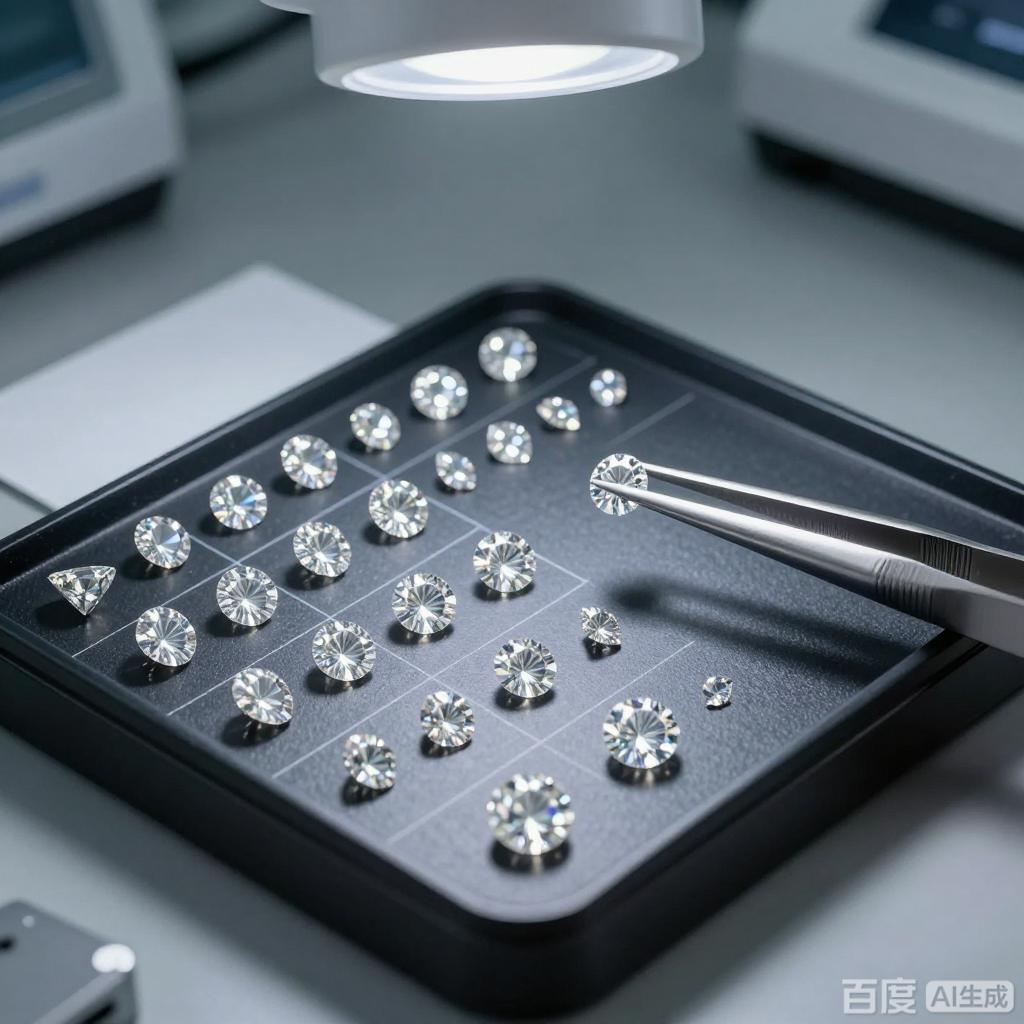
Lab Grown Diamonds at a Glance
Lab grown diamonds (also called lab-created, man-made, or synthetic diamonds) are real diamonds with the same chemical, physical, and optical properties as mined diamonds: pure carbon crystallized in cubic structure, hardness 10 on the Mohs scale, refractive index 2.42, dispersion 0.044. They are grown in laboratories using one of two methods, rather than mined from the earth. The FTC Jewelry Guides require clear disclosure that lab grown diamonds are not mined; they cannot be marketed as "diamonds" without qualifier such as "lab-grown" or "lab-created."
The two production methods for wholesale lab grown diamonds are:
- HPHT (High Pressure High Temperature): Diamonds grown in a press at ~5 GPa pressure and 1300-1600°C mimicking natural diamond formation. HPHT stones grow faster, often show metallic flux inclusions under magnification, and typically have stronger fluorescence patterns. HPHT is often used for smaller stones (melee) and for colors (fancy yellow, blue, pink are more easily produced by HPHT).
- CVD (Chemical Vapor Deposition): Diamonds grown in a vacuum chamber at lower pressure (~1/10 atmosphere) where a carbon-rich gas plasma deposits carbon onto a seed diamond. CVD produces larger, higher-clarity stones with fewer metallic inclusions; color can be improved by post-growth HPHT treatment. Most engagement-quality D-F VVS/VS lab grown diamonds sold today are CVD, sometimes with HPHT post-treatment for color.
Both are real diamonds. There is no optical or chemical difference between a CVD and HPHT diamond once grown and polished; they are distinguished by growth features visible under specialized microscopy and by their IGI/GCAL certification reports.
Grading Lab Grown Diamonds
Lab grown diamonds are graded on the same 4C scale as mined diamonds: Color, Clarity, Cut, Carat weight. The GIA and IGI both issue grading reports for lab grown diamonds; IGI is the dominant certification in the wholesale lab grown market today, with GCAL growing as an alternative.
| Grade Dimension | Economy/Budget | Premium (Engagement Quality) | Super Premium |
|---|---|---|---|
| Color | G-H-I near colorless | D-E-F colorless | |
| Clarity | SI1-SI2 (eye-visible inclusions possible) | VS1-VS2 (eye-clean) | VVS1-VVS2 (loupe-clean rare inclusions) |
| Cut | Very Good / Good | Excellent / Ideal cut | Ideal / Triple Excellent with hearts and arrows |
| Certification | None or in-house grade | IGI or GCAL report | IGI with laser inscription, sealed |
| Typical wholesale price (1.0ct round, 2026) | $120-180 | $220-380 | $400-550 |
| Recommended use | Fashion jewelry, earrings, pendants | Engagement rings, bridal | Signature solitaire, high-end bridal |
Color and clarity are the two biggest price drivers. For engagement ring programs, D-E-F VS is the sweet spot: eye-clean, colorless, and priced significantly below VVS at near-identical face-up appearance. Stones in the G-H-I range are more affordable but show warmth in direct side-by-side comparison; they are commonly used in earrings, pendants, and fashion pieces where color match matters less.
CVD vs HPHT: How to Choose for Wholesale
For large center stones (0.5ct and up): CVD is usually the better choice. CVD produces larger rough more efficiently, yields higher color grades after post-growth treatment, and dominates the D-F VVS/VS segment at 1-3ct sizes.
For melee (0.7mm-2.9mm) and small accent stones: HPHT is more cost-effective and dominates melee supply. HPHT melee is produced in large quantities at consistent color (typically DEF/GH) and is available calibrated to ±0.02mm for pavé and channel setting.
For fancy colors (pink, blue, yellow): HPHT produces vivid yellows, blues, and pinks more reliably than CVD for most commercial grades. CVD can produce pink and blue but at higher cost and lower yield. Fancy color lab grown diamonds typically sell at 40-70% above white per carat depending on color intensity.
For branded "no-growth-treatment" positioning: Some brands prefer "as-grown" CVD (without post-growth HPHT treatment) for marketing purposes. These are available at a 20-40% premium with disclosure of no post-treatment.
For detailed comparison of growth characteristics, see the synthetic diamond article on Wikipedia.
Lab Grown Diamond Wholesale Pricing Reference (2026)
Prices below are reference wholesale pricing for IGI-certified D-E-F VS1-VS2 round excellent cut lab grown diamonds (CVD, post-growth treated) at parcel quantities 20+ stones:
| Carat Weight | Approx mm (Round) | Wholesale Price Per Stone (Reference) |
|---|---|---|
| 0.30ct | 4.3mm | $50-80 |
| 0.50ct | 5.1mm | $90-140 |
| 0.70ct | 5.7mm | $140-210 |
| 1.00ct | 6.4mm | $220-380 |
| 1.25ct | 6.9mm | $300-500 |
| 1.50ct | 7.3mm | $400-700 |
| 2.00ct | 8.1mm | $700-1,200 |
| 2.50ct | 8.7mm | $1,100-1,800 |
| 3.00ct | 9.3mm | $1,600-2,600 |
| Melee 0.7-1.3mm (per stone) | - | $0.50-2.50 |
| Melee 1.5-2.9mm (per stone) | - | $2.50-20 |
Prices fluctuate with supply and demand; lab grown prices have trended downward over the past five years as production capacity has expanded. Buy parcels from suppliers who update pricing in real time, and lock pricing in writing at order. Fancy shapes (oval, cushion, emerald, princess, pear, marquise, radiant, asscher, heart) typically run 5-20% below round pricing (unlike natural diamonds, where rounds often trade at a premium due to demand). Melee prices vary by size and calibration.
Certification, Laser Inscription, and Verification
Every lab grown diamond 0.30ct and up should come with an IGI or GCAL grading report, laser-inscribed on the girdle with the report number. Before accepting a parcel:
- Match laser inscription on each stone to its report under 10x or 20x loupe. The inscription must be legible and exactly match the report number.
- Cross-check key measurements on the report (diameter, depth, table percentage) against your own measurement of the stone with a digital gauge and proportion scope.
- Verify color and clarity against master stones in a D65 light booth (color) and 10x loupe (clarity).
- Confirm the report lists "Laboratory Grown" as the origin; reports are available to verify on the IGI and GCAL websites by report number.
Uncertified parcels are available at lower prices but carry substantial grading risk; we recommend certified stones for any engagement ring or high-value piece, and uncertified only for small melee where grading reports per stone are uneconomical.
Vetting a Lab Grown Diamond Wholesale Supplier
- Publishes live pricing per grade: Reputable suppliers show price per color/clarity/carat combination, not just a generic range.
- Inspect reports on the website: Reputable suppliers provide IGI/GCAL report PDFs online so you can review before purchase.
- Calibration guarantees for melee: ±0.02mm calibration tolerance is required for pavé and channel setting; ask for tolerance in writing.
- Returns for mis-graded stones: A legitimate supplier accepts returns or replacement on stones that do not match certified grade.
- Stock consistency: Suppliers holding their own inventory ship reliably; brokers sourcing third-party parcels can have color-match issues across batches.
- Compliance with disclosure rules: FTC requires lab grown disclosure; suppliers who describe stones as "diamonds" without the lab-grown qualifier or who mix lab and natural are operating illegally.
HOLYCOME supplies lab grown diamonds wholesale across CVD and HPHT in all shapes and grades from 0.7mm melee through 5ct center stones. We primarily ship IGI-certified stones on 0.30ct+, with GCAL available on request. Melee is color-matched within parcels and calibrated to ±0.02mm for setting. All certified stones carry laser inscriptions matching their reports; we provide digital PDFs of every report with shipment. We also supply finished lab grown diamond jewelry as an OEM manufacturer, with stones set and QC'd in our Guangzhou factory.
MOQ, Lead Time, Ordering
- Sample stones: 1-5 stones, no MOQ, ship 2-3 business days from stock.
- Small wholesale (10-50 stones total): Per-stone wholesale pricing, ship 3-5 business days.
- Bulk wholesale (50-500 stones): Tier pricing, 5-7 business days from stock; rare sizes/fancy colors 10-14 days.
- Volume OEM (500+ stones or matched jewelry production): Deepest tier pricing, stones pre-calibrated for setting jigs, shipped sequenced by size/grade. Lead time 14-21 days for non-stock sizes.
Frequently Asked Questions
Q: Are lab grown diamonds real diamonds?
Yes—lab grown diamonds have the same chemical composition (pure carbon in cubic crystal), physical properties (hardness 10 Mohs, refractive index 2.42, thermal conductivity), and optical appearance as mined diamonds. They are not simulants like cubic zirconia or moissanite. The FTC requires them to be labeled as lab-grown.
Q: Will a lab grown diamond test positive on a diamond tester?
Yes—standard thermal conductivity diamond testers will read lab grown diamond as diamond because thermal conductivity is identical. Specialized testers that use electrical conductivity (or UV fluorescence) are required to distinguish lab from natural.
Q: Do lab grown diamonds come with certificates?
Stones 0.30ct and up come with IGI or GCAL grading reports with laser inscriptions on the girdle. Melee under 0.30ct typically ships without per-stone reports but with a parcel summary grade.
Q: Can I buy melee lab grown diamonds calibrated for pavé?
Melee (0.7-2.9mm) in D-E-F and G-H color, VVS-VS clarity, calibrated to ±0.02mm is a core stock item, sold in parcels of 50, 100, or 500 pieces. Melee parcels are color-matched within the parcel for consistent appearance across a pavé setting.
Q: How does CVD compare to HPHT in price?
In sizes 0.5-3ct D-F VS, CVD typically prices 5-15% above HPHT due to higher yield of high-color rough. Below 0.3ct HPHT dominates and is usually the only practical option at scale. Fancy colors in HPHT (particularly yellow and blue) often price below CVD equivalents.
Q: Can I buy matched pairs for earrings?
Matched pairs (same color, clarity, cut, dimensions within ±0.02mm, fluorescence matched) are available on request for stud earrings. We match pairs under D65 daylight and laser-inscribe both stones before shipment.
Key Takeaways for Lab Grown Diamond Wholesale Buyers
- IGI certification with laser inscription is baseline expectation for stones 0.30ct and up; always verify inscription matches the report under loupe.
- CVD dominates D-F VVS/VS center stones; HPHT dominates melee and fancy colors.
- D-E-F VS excellent cut is the engagement ring sweet spot; price (2026) runs $220-380 for 1.0ct round.
- Melee must be ±0.02mm calibrated for pavé; color-matched within parcels.
- Sample stones before bulk parcels; use a master stone set and D65 light booth for intake verification.
- Work with a supplier who publishes live pricing per grade and accepts returns on mis-graded stones.
Ready to place a lab grown diamond wholesale order or receive a quote for center stones, melee, or matched pairs? Send us your target sizes, grades, shapes, quantities, and timeline, and we will return a quotation with available stock, grading report previews, and shipping estimates within 24 hours.
Related reading: Wholesale Lab Grown Diamonds Supplier CVD HPHT Bulk, CVD vs HPHT Lab Diamonds Value, Wholesale Lab Grown Diamond Jewelry Bulk.