Moissanite Cut Quality and Brilliance - HOLYCOME
Two moissanite stones, both marketed as D color, VVS clarity, one carat. One costs fifty dollars, the other ninety. The color and clarity on paper are identical, but on the finger one looks like a bright, sparkling center stone and the other looks dull, glassy, and slightly gray. Almost always, the difference is the cut. At our Wuzhou factory we see this every week, and we want buyers to understand it, because cut quality is the single most underestimated factor in moissanite value. A poorly cut moissanite wastes the very thing you are paying for, which is light. A well-cut moissanite can look larger, brighter, and more expensive than a larger, better-colored stone that was cut badly.
This guide explains how a gemstone cut works, why it matters more than color or clarity for moissanite, what happens when a stone is cut too deep or too shallow, how the different shapes behave, and how to tell a good cut from a bad one before you buy. We also cover what this means for wholesale buyers selecting stock, and why we invest in cutting precision even when it raises the cost. By the end, you will know why the cut is the secret behind the price difference between two stones that look the same on a spec sheet.
The reason cut matters so much for moissanite is that moissanite has an even higher refractive index than diamond. Done well, that means more sparkle than diamond. Done badly, it means light pours out the bottom and sides and the stone looks dark from the top. Because moissanite is already affordable, the temptation in cheap production is to cut fast, save material, and maximize yield rather than maximize beauty. That tradeoff is exactly what you see in the dull stones sold at the lowest prices. Good cutting is a choice, and it is worth paying for.
What a Gemstone Cut Actually Does
A cut is not just a shape. It is a set of precisely angled flat surfaces, called facets, designed to control light. When light enters a well-cut stone, it travels through the top, bounces off the angled back facets, and returns out the top to your eye. That returned light is what you call brilliance. When the cut is wrong, light escapes through the pavilion, the pointed bottom, and never comes back. The stone looks dark or glassy, no matter how clear the material inside is.
The angles and proportions have to be within a tight window. If the pavilion is cut too deep, light leaks out the bottom. If it is cut too shallow, light leaks out the sides and creates a dark or washed-out window in the center. The table, the flat top facet, also has to be the right size. Too large and the stone loses fire. Too small and it looks heavy. Getting all of this right requires a skilled cutter and precision machinery, which is why a good cut costs more than a rushed one.
For moissanite, this is especially delicate because the material is brittle in certain directions and can chip if cut carelessly. An experienced cutter knows how to orient the rough and how to polish each facet without damaging it. A factory that treats moissanite like cheap cubic zirconia will produce stones that look the part in a photo but disappoint in person. We explain the shape choices in our guide to moissanite cuts and shapes, but the underlying principle is the same for every shape.
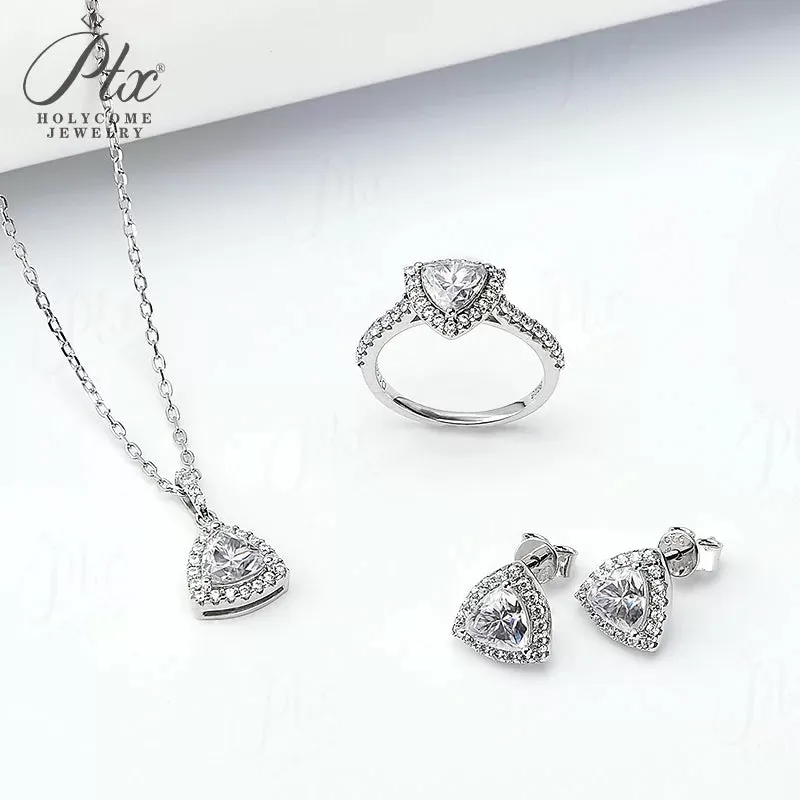
Why Cut Matters More Than Color or Clarity
With diamonds, buyers obsess over color and clarity because those grades are visible in a graded stone. With moissanite, almost every commercial stone is already very clean and color-sorted. The differences that remain are mostly in the cut. A well-cut D-F stone and a well-cut G-H stone can look remarkably similar on the hand, because both return light beautifully. A badly cut D-F stone, however, will look dull next to a well-cut G-H stone, because the bad cut defeats the color advantage.
This flips the usual buying advice. On a budget, spend on cut first, then size, then color. A round, well-cut G-H 6.5 mm stone will outsparkle a poorly cut D-F 7 mm stone. Customers notice brightness immediately, but they rarely notice a half-grade of color. We have seen retailers sell more rings when they prioritize cut over a slightly higher color grade, because the product photographs and looks better.
Clarity is the least important of the four Cs for moissanite. Lab-grown moissanite is typically eye-clean, and the difference between VVS and SI is invisible to the naked eye in a finished ring. We explain this in our article on moissanite clarity grades. The practical message is simple: if you are choosing between a cheaper stone with a great cut and an expensive stone with a merely average cut, take the great cut every time.
What Happens With a Bad Cut
A bad cut has a few telltale signs. The stone may look dark through the center, a window effect where light does not return. The edges may look like a dark outline instead of sparkling. Fire, the rainbow flashes, may be weak or absent. The stone may look smaller than its stated size because the cutter left too much material in the bottom and not enough on the face. These stones are cheap to produce because the cutter saved rough and worked fast, but they are the reason some customers come away thinking moissanite does not look as good as diamond.
In many cases the problem is not even the material. It is the proportion. A moissanite boule that could have made a beautiful stone was cut for maximum yield instead of maximum beauty. The factory kept a few extra percent of weight, and the customer got a dull stone. This is the hidden cost of ultra-cheap moissanite. You are not paying for bad material. You are paying for bad proportions.
For a wholesale buyer, this is the most important quality check you can do. Ask suppliers for real sunlight videos of the stone, not studio photos. In direct sun, a good cut throws rainbow fire and returns bright white light. A bad cut goes dark and lifeless. If a supplier cannot show you that video, you cannot trust the cut. We send these videos as standard, because we know the cut is what makes the sale after the customer receives the ring.
How Shape Changes Brilliance
Cutting is not only about proportions. The shape itself changes how the stone performs. Round brilliant is the most forgiving and the most brilliant, because its 57 or 58 facets are mathematically tuned to return light. A round moissanite almost always looks bright, even at a moderate price. This is why the round is the default bridal shape and the safest seller for retailers.
Fancy shapes like cushion, oval, pear, and emerald are harder to cut well. An emerald cut shows long parallel facets that reveal any leak in light return, so a bad emerald cut looks especially dull. An oval or pear cut can show a bow-tie shadow across the middle if not cut carefully. Cushion cuts can look soft and chunky when proportions are off. These shapes are beautiful when cut well, but they demand more skill, which is why a poorly cut fancy shape disappoints more often than a poorly cut round.
For value, the round brilliant is your most dependable choice. For customers who want a trendy or vintage look, the fancy shapes are worth the investment in a good cutter. We help retailers match the shape to the customer. If a buyer wants maximum sparkle per dollar, we steer them to a round. If they want a distinctive look, we supply a well-cut oval or cushion and explain the tradeoff. You can read more about these shapes in our cut shapes guide.
| Shape | Brilliance | Difficulty to cut well | Value for money |
|---|---|---|---|
| Round brilliant | Very high | Moderate | Best |
| Oval | High, watch bow-tie | High | Good |
| Cushion | High, soft fire | High | Good |
| Pear | High, watch shadow | High | Good |
| Emerald | Lower, step-cut | Very high | Style over sparkle |
How Cut Affects Resale and Perceived Value
Although moissanite has limited resale value overall, the cut still affects how a ring is perceived and priced. A well-cut stone looks like a more expensive stone, and customers intuitively pay for that. When you sell a well-cut moissanite, you can honestly say it looks brighter than many diamonds, and that justifies a stronger price. A poorly cut stone drags the whole product down, and customers question whether they got a deal or a dud.
This is the emotional side of cut value. People buy sparkle. A ring that catches light and throws fire gets compliments, gets photographed, and feels like a treasure. A ring that looks like glass on the finger feels like a cheap purchase, even if the material underneath is identical. We discuss the emotional and resale side more broadly in our article on moissanite value over time. The cut is what makes the wearing experience worth the money, long after the purchase day is forgotten.
For a retailer, this means the cut is your best marketing asset. Product photos that show fire, videos that show the stone catching light, and in-store lighting that makes the stone dance all sell the cut. When you buy well-cut stones, your photography is easier and your reviews are better. When you buy cheap, poorly cut stones, no amount of marketing can overcome the dull look customers receive.
How to Judge a Cut Before You Buy
You do not need an optical lab to judge a moissanite cut. A few simple checks reveal most problems. First, look at a video of the stone in natural daylight. A good cut flashes bright white and colorful fire as it moves. A bad cut stays dark or flat. Second, look for a window, a dark or washed-out center when viewed from the top. That means light is leaking out. Third, check for an obvious bow-tie shadow in oval or pear shapes. Some bow-tie is normal, but a heavy one means a poor cut.
If you can hold the stone in person, turn it under a lamp. The whole table should sparkle evenly. If one corner goes dark, the proportions are off. Compare it next to a known good stone. The difference is immediate. This is why ordering a sample is so valuable. A photo cannot tell you what a moving, sunlit stone will do. We recommend every retailer order one sample from a new supplier before committing to a bulk order.
Finally, buy from a factory that stands behind its cut. At our Wuzhou workshop, we cut to tight tolerances and inspect each stone before it sets. If a stone is not returning light properly, it does not ship. That quality step costs us a little per stone, but it protects our customers from the dull-stone problem entirely. When you source cut-quality stones, you are buying peace of mind, not just a pretty rock.
Why Factories Sometimes Cut for Yield
To understand why so many cheap moissanite are poorly cut, you have to look at the factory's incentive. A rough moissanite boule costs money, and every cut stone that is smaller than it could be is a small loss. When demand is price-driven, some factories choose to keep more weight by cutting shallower or deeper, rather than optimizing for beauty. The stone passes a basic inspection, it looks okay in a photo under studio lights, and it sells for the lowest possible price. The customer gets a stone that is fine on a screen but dull on a hand.
This is a tradeoff, not a mistake. Cutting to ideal proportions wastes more rough and takes more labor hours. A factory cutting for yield can produce more stones per boule and sell each one cheaper. The two strategies serve different customers. The yield cutter serves the buyer who only cares about the lowest price. The precision cutter serves the buyer who cares about how the stone actually looks. At our Wuzhou workshop, we choose precision, because the retailers we work with build repeat business on how the stone looks on real hands, not on the lowest possible invoice.
For a wholesale buyer, this means the cheapest supplier is not always the smartest supplier. A slightly higher per-stone price from a cutter who prioritizes brilliance will save you on returns, bad reviews, and exchanges. We have found that retailers who buy our precision-cut stones sell them faster and reorder sooner, because their customers are delighted. The math favors quality over rock-bottom price, especially for a product that lives or dies on its sparkle.
Polish, Symmetry, and Finish Details
Beyond the main proportions, the finish details matter. Polish refers to how smoothly the facets are finished. A poor polish leaves tiny scratches on the facet surfaces, which scatter light instead of reflecting it cleanly. The stone still looks bright, but it lacks that crisp, mirror-like depth. Symmetry refers to whether the facets line up evenly around the stone. Poor symmetry makes the sparkle look uneven, with one side brighter than the other. These details separate a commercial stone from a really good one.
On a GRA certificate, you may see grades for polish and symmetry. Treat them like you would for a diamond. An excellent polish and excellent symmetry mean the facets are clean and aligned, and the light return is as good as the proportions allow. A good or fair grade is acceptable, but anything below that starts to show. At our factory, we aim for excellent on both, because the cost difference is small and the visual payoff is real.
These finish details are also where cheap production cuts corners. Polishing each facet by hand takes time. Buffing it quickly leaves micro-scratches. Over time, a poorly polished stone can look a little hazy, even though moissanite itself is hard. A well-polished stone stays mirror-bright for decades. When you compare two stones side by side, the difference in finish is visible within seconds. It is one more reason to buy from a cutter who cares about the final surface, not just the finished weight.
Pairing Cut With the Right Setting
Even a great cut can be let down by the wrong setting. A thick bezel that covers the outer facets blocks light from entering the stone and dims the sparkle. A solitaire with thin prongs, by contrast, lets light reach the stone from all sides and maximizes brilliance. When you choose a ring, think about how much of the stone the setting hides. A halo setting can actually enhance sparkle by adding small surrounding stones, but a heavy closed-back setting can trap light and dull the center stone.
For a moissanite, an open or semi-open basket is usually best. It lets light pass through the pavilion from below, which is where much of the return light comes from. A closed, solid back seals the stone off and reduces the very brilliance you paid for. This is a detail many buyers never notice, but it changes how lively the stone looks. At our workshop, we design settings with open backs for our brighter stones, because we want the cut to show.
Wholesale buyers should match setting to stone. A precision-cut oval in an open prong setting will outshine the same stone in a heavy vintage bezel. If you are selling a design-forward setting, choose a shape and cut that suits it rather than assuming any stone will look good. The cut and the setting work together. A bad setting can waste a great cut, and a great setting can rescue a merely good one. Treat them as one decision, not two, and never assume the factory has already checked how the whole piece looks in daylight. That small habit will save you returns and keep your customers coming back for more, year after year, season after season, always, now, thanks. That final check is what catches the rare ring where the setting, not the stone, is holding back the sparkle, and it is a step we encourage every retailer to make before a piece reaches a customer's hand.
Frequently Asked Questions
Can a moissanite be too poorly cut to look good? Yes. Bad proportions can make even a D-color stone look dark and glassy. Cut is the most important factor in how it actually looks.
Is a round always more sparkly than an oval? Generally, yes. Rounds are easier to cut to excellent proportions. Ovals can be brilliant but risk a bow-tie shadow.
Should I pay more for an excellent cut? Yes, especially for a center stone. A good cut returns light and looks larger and brighter, which customers notice immediately.
Does a bad cut affect durability? Not directly, but poorly placed facets can be more prone to chipping. More importantly, it ruins the look you bought the stone for.
How can I tell if an online moissanite is well cut? Ask for a real sunlight video. Studio photos hide bad cuts. Natural-light video shows whether the stone actually returns light.
Cut quality is the hidden engine of moissanite value. Two stones with identical color and clarity can feel like completely different products depending on how well they are faceted. A great cut makes an affordable stone look luxurious. A poor cut wastes even the finest material. When you buy, prioritize cut above color and clarity, ask for sunlight video, and source from a factory that inspects its proportions.
If you want to see the difference a precision cut makes, we are a moissanite and 925 silver manufacturer in Wuzhou, China, shipping graded, well-cut stones to retailers and customers worldwide. Email service@holycome.com for samples and our current cut-quality stock, and read more on our moissanite value guides, including how pricing relates to cut and grade, before you order.