Moissanite vs Diamond Rings: The Value Comparison Honest Buyers Need
It is the comparison every couple faces before buying an engagement ring: moissanite, or diamond? Marketing has spent decades framing the choice as a moral and financial test, where choosing moissanite feels like settling for a fake and choosing diamond feels like the only serious option. The actual comparison, once you remove the advertising, is far more balanced. Moissanite and diamond rings differ in origin, price, appearance, and character, but not in the way the diamond industry would have you believe. This guide compares them honestly across cost, looks, durability, and resale, so you can choose with facts rather than fear. As a Wuzhou factory that sets both moissanite and works with lab-grown alternatives into 925 silver, we have a practical view of how they actually compare on a hand.
We will not tell you one is universally better. Some people want a natural diamond, and that is a legitimate choice. But we will show that moissanite is not a consolation prize. It is a distinct stone with its own character, and for many buyers it is the smarter value. By the end, you will know exactly where the two stones differ, what the price gap buys you, and which choice fits your life without the pressure of decades of advertising.
How the Two Stones Actually Compare
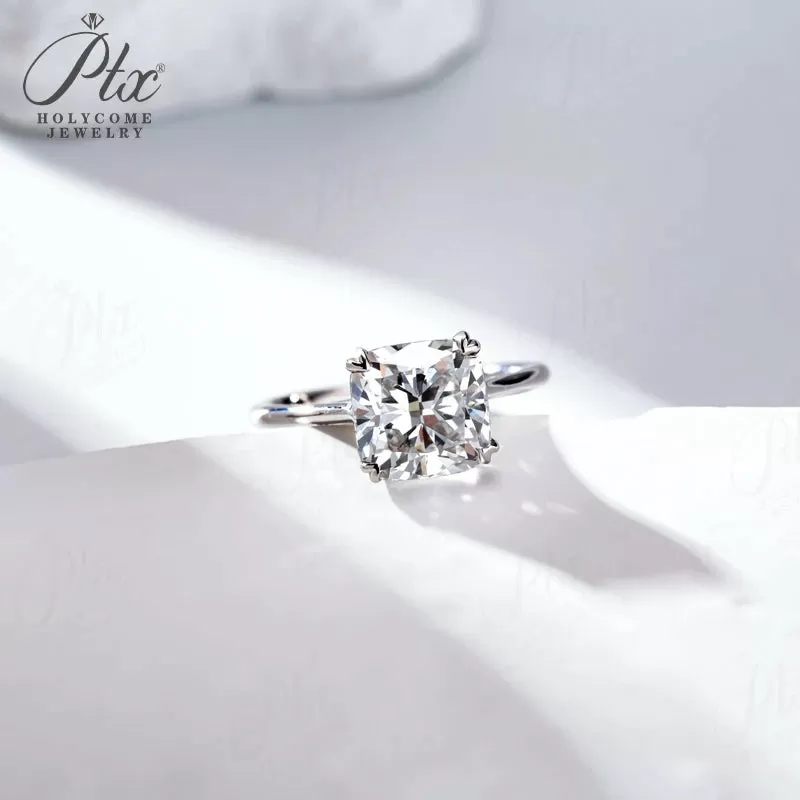
Diamond is a natural mineral formed deep in the earth over billions of years and mined. Moissanite is a lab-created silicon carbide crystal, grown in a controlled environment. Both are among the hardest materials used in jewelry, and both can be cut into brilliant, colorless stones. To the naked eye, a well-cut moissanite and a small diamond can look remarkably similar, especially on a hand in normal lighting. The difference most people notice is that moissanite tends to show more colorful fire, flashes of rainbow light, while diamond has a brighter, whiter brilliance. Neither looks fake if well cut; the distinction is a subtle character, not an obvious giveaway.
The way you tell them apart is with a trained eye or a tester, not by looking at them across a room. Most onlookers could not distinguish a one-carat moissanite from a one-carat diamond, and even many jewelers need a tool to be sure. This is why the "fake" label is unfair. A moissanite is a real, durable, beautiful gemstone, just not a diamond. It is no more a fake diamond than a cultured pearl is a fake pearl. It is a different stone with its own properties. Treating it as inferior assumes the diamond's marketing story rather than judging the stone on its merits.
Where they genuinely differ is origin and ethics. Diamonds are mined, with all the environmental and human history that sometimes accompanies it. Moissanite is lab-grown, with no mining and a tiny ethical footprint. For many modern buyers, this is decisive. They want a brilliant stone without worrying about where it came from. Moissanite also has no blood-diamond concerns, which is a comfort in itself. When you add ethics to appearance, moissanite often wins on principle for buyers who care about the story behind the stone. Our broader take on the stone lives in whether moissanite is worth it.
The Price Gap, and What It Buys
The most striking difference is price. A one-carat, well-cut moissanite might cost a few hundred dollars, often set in silver for a total ring price well under a few hundred. A comparable one-carat natural diamond ring starts in the thousands and climbs steeply with clarity and color. The visual difference on the hand is small, but the price difference is enormous. So what does the diamond premium actually buy? It buys the rarity of a natural mined stone, the tradition and emotional weight attached to it, and the resale potential of a recognized gem. It does not buy a visibly brighter stone. Most of the premium is the story and the rarity, not the sparkle.
This is the crux of the value decision. If you value the tradition, the rarity, and the recognized status of a diamond, the premium is meaningful to you and worth paying. If you value the look, the ethics, and keeping your budget for other things, the premium buys you something you cannot actually see. There is no right answer for everyone. But there is a wrong answer, and it is paying the diamond premium because you were told you had to, without realizing how small the visual difference is. Buyers who understand this comparison usually choose deliberately, not by default.
For couples on a budget, moissanite unlocks a stone size they could never afford in diamond. A two-carat moissanite ring might cost what a half-carat diamond costs. That means you can have a large, eye-catching stone that looks luxurious, at a price that does not strain you. Many couples report that being able to afford the ring they actually dreamed of, rather than the small one they could budget for, made them far happier. The money saved can go toward a home, a wedding, or savings. That reallocation is the clearest financial value moissanite offers.
Durability for Daily Wear
On durability, both stones are serious. Diamond is the hardest known natural material, and moissanite is nearly as hard on the hardness scale. Both resist scratches far better than softer gems like sapphire alternatives or pearls. This means either stone can be worn daily without scratching easily. You can wear a moissanite ring in the shower, at the gym, during work, and it will stay bright. The stone itself is not the fragile part of either ring. The setting is what needs care, because prongs can loosen over years of friction.
There is a subtle difference in how they handle wear. Moissanite's extra fire can occasionally show more internal reflections, and very rarely a tiny inclusion or growth line is visible under magnification, but for daily wear this is irrelevant. Diamond's superior hardness makes it marginally more chip-resistant at the edges, but both are tough enough for ordinary life. The practical conclusion is that neither stone will scratch or break under normal use. If you are choosing based on durability, they are close enough that it should not decide the comparison. Choose on appearance, ethics, and budget.
The real durability factor is the setting, not the stone. A solid 925 silver band with well-formed prongs will hold either stone securely for years. A thin, flimsy setting will loosen its prongs regardless of whether the stone is moissanite or diamond. This is why we focus so much on the setting. Buyers sometimes overinvest in the stone while underinvesting in a solid band, and the ring fails not because of the stone but because the setting was cheap. Put the money into a well-made setting, and either stone will last for decades of daily wear.
Resale and Long-Term Value
Here diamond has the clear, honest advantage. Natural diamonds are a recognized commodity with a (thin but real) secondary market, so a significant well-documented diamond retains some resale value. Moissanite has almost no secondary market, because loose moissanite is inexpensive and produced in quantity. So if your primary concern is the ring holding financial value over decades, diamond is the stronger choice. This is the argument the diamond industry leans on, and it has a basis in reality. A diamond is partly a stored asset; a moissanite is a wearable accessory.
But the same balancing point applies here as elsewhere. Because the diamond cost so much more upfront, its resale advantage is partly offset. A $5,000 diamond ring reselling for $1,500 means losing $3,500. A $300 moissanite ring reselling for $50 means losing $250. The percentage loss looks worse for moissanite, but the absolute financial exposure is an order of magnitude smaller. If you think in dollars rather than percentages, the moissanite choice is far less risky. You are not out a fortune if you lose the ring, damage it, or decide to sell. The diamond's resale edge does not erase the fact that you spent thousands in the first place.
The deeper truth, covered in moissanite ring resale reality, is that almost no engagement ring holds its full retail price on resale. The diamond's edge is real but modest relative to its markup. So buy the stone for how it looks and what it means to you, not as an investment. If you want a stored asset, buy gold bullion or a genuinely rare stone from a specialist. For a ring you will wear daily, the experiential value dwarfs the resale difference. Choose the stone that makes you happiest, at a price you are comfortable with.
Who Should Choose Which
The choice comes down to priorities. Choose moissanite if you want a brilliant, large, ethical stone at a fraction of diamond cost, if you want to avoid mining concerns, or if you would rather spend on your life than on a stone's rarity. Moissanite is ideal for budget-conscious couples, for people who want a big look, and for anyone who does not care about the recognized status of a mined stone. It also pairs beautifully with a solid silver setting, keeping the total cost sensible.
Choose diamond if the tradition and rarity genuinely matter to you, if you want the recognized status of a mined gem, or if you specifically value the modest resale potential. A natural diamond is a fine choice when you can pay for it comfortably and it has personal meaning. The key is to choose it for those reasons, not because you were told it is the only responsible option. Once you understand the comparison, both choices are legitimate. The mistake is choosing diamond out of pressure, or choosing moissanite out of feeling you cannot afford diamond, when the real difference is smaller than you were led to believe.
Many couples land in the middle with lab-grown diamonds, which offer the diamond material at a lower price than mined. But for pure value, moissanite remains the most affordable brilliant option. Whatever you choose, buy the stone you will love looking at every day for decades. That daily enjoyment is the real value, and it is identical whether the stone was grown in a lab or pulled from the earth.
The Hidden Cost of Choosing by Default
Most people do not actually choose between moissanite and diamond. They choose diamond, because that is what the engagement-ring world assumes they want, and they never seriously weigh the alternative. This default choice quietly costs them a great deal. A couple that defaults to a small budget diamond often spends several thousand dollars on a stone they could have replaced with a much larger moissanite for a tenth of the price, and they carry that spending into the start of their married life. The money that could have funded a down payment, an emergency fund, or a comfortable honeymoon instead sits on a finger, financed in many cases. There is nothing wrong with wanting a diamond, but there is a lot wrong with never asking whether the default was worth it.
The reason the default persists is that the social pressure around engagement rings is enormous. A proposal is not just a personal moment; it is a performance of commitment to friends and family, and people worry that a smaller or less conventional ring will signal a smaller commitment. But that concern rarely survives contact with reality. Almost no one at a proposal is examining the stone's origin, and the people who love you will celebrate the gesture regardless. Meanwhile, the couple that chose moissanite often reports that their ring drew compliments for its size and sparkle, never for its cost. The social story people fear is mostly imaginary, while the financial cost of the default is entirely real.
This is why we encourage buyers to pause and run the comparison honestly. If, after seeing the price gap and the near-identical look, you still want a natural diamond, that is a confident, informed choice, and we respect it. The problem is the choice made by habit. When you deliberately choose diamond, you buy the tradition you value. When you default to it, you pay for a marketing narrative you did not even examine. The best ring decision is the one you would defend if someone asked why you chose it, not the one you made because it was expected.
Setting Matters More Than the Stone in Practice
Here is a practical secret that reframes the whole comparison: for most daily-wear rings, the setting contributes more to your long-term satisfaction than the stone does. A beautiful stone in an uncomfortable, flimsy setting becomes an annoyance. It catches on clothes, loosens over time, and sits awkwardly on the finger. A modest stone in a comfortable, solid, well-finished setting becomes a joy you forget you are wearing. This is why obsessing over the stone while skimping on the band is backwards. The setting is what you feel against your skin every hour of the day. The stone is what you glance at occasionally.
For a moissanite ring, this insight is liberating. Because the stone itself is affordable, you can spend your budget on a solid, beautifully finished 925 silver setting that feels wonderful, rather than pouring all the money into the stone and leaving the band thin. The result is a ring that wears like a million dollars, because the part you actually feel is well made. A diamond buyer, by contrast, often spends so much on the stone that the setting ends up a afterthought, and the ring that cost thousands can still feel slightly cheap where it meets the finger. Allocating budget to the setting is one of the smartest moves any ring buyer can make.
This is also where factory-direct value shines. A well-made silver setting, produced efficiently and sold without retail markup, costs little compared to its quality. You can have a heavy, smooth, rhodium-plated band that wears comfortably for years, paired with a brilliant moissanite, for a total price that a retail diamond setting alone would exceed. When buyers see this combination, they often realize the ring they always wanted was never about the stone's origin at all. It was about how good the ring feels, and how it looks on their hand. Both of those things are delivered beautifully by moissanite in a solid setting. We detail the finish options in silver ring plating, which protects that daily comfort over years.
The Short Version for the Indecisive
If you are stuck and want a quick decision rule, use this. Choose moissanite if your budget is under a few thousand dollars, if you want a stone that looks large and brilliant, if you care about ethical sourcing, or if the thought of spending thousands on a ring makes you uneasy. Choose diamond only if a natural stone specifically matters to you, you can pay for it without financing, and the tradition is something you will genuinely enjoy. If neither of those strong conditions applies, moissanite is the rational default, not the compromise. It gives you the ring you will actually wear and love, at a price that leaves room for the rest of your life together.
Whatever you decide, do not let the choice become a source of anxiety. A ring is a symbol, not a test. The marriages that last are built on the people wearing the rings, not on the stones in them. Buy the ring that makes you both smile when you see it, pay a price you will not resent, and move on to the life the ring represents. That calm, sensible choice is worth more than any stone, whichever one you pick.
And remember this as you shop: the right ring is the one you will still love ten years from now, not the one that impressed people on the day you bought it. A moissanite chosen freely and joyfully will be worn and cherished for decades. A diamond chosen under pressure will always carry the memory of the cost. When you frame it that way, the value comparison becomes obvious. Choose the stone you love, at a price that leaves your life unburdened, and let the ring be the start of something rather than the weight of it.
Frequently Asked Questions
Can people tell moissanite from diamond? Rarely by eye. A trained jeweler or a tester can, but most onlookers cannot distinguish a well-cut moissanite from a similar diamond.
Is moissanite a fake? No. It is a real, durable lab-created gemstone with its own character. It is not a diamond, but it is not a fake one any more than a cultured pearl is a fake pearl.
Which holds more resale value? Diamond, because it is a recognized natural gem. But because a diamond costs far more upfront, the absolute dollars lost on a moissanite ring are small.
Which should I choose on a budget? Moissanite. It lets you afford a larger, brilliant, ethical stone at a price that does not strain your finances, leaving money for other life goals.
The Bottom Line
Moissanite and diamond both make beautiful, durable rings. Moissanite wins on price, size, ethics, and low financial risk; diamond wins on rarity, tradition, and a modest resale floor. The visual difference on the hand is smaller than the price difference. Choose diamond if its meaning and status matter to you, and moissanite if you want the look without the cost. Either way, choose deliberately rather than by default, because the ring you wear for decades deserves that much thought.
If you want to see moissanite rings set in solid 925 silver with honest sizing, our Wuzhou factory can show you options. Reach us at service@holycome.com, and browse our 925 silver collection to compare rings that look brilliant and cost sensibly. Once you hold one in your hand and see how it catches the light, the comparison between a sensible moissanite and a far pricier diamond often becomes surprisingly easy to settle. We will walk you through every option with no pressure.