Wholesale Jewelry Sample Order Tips
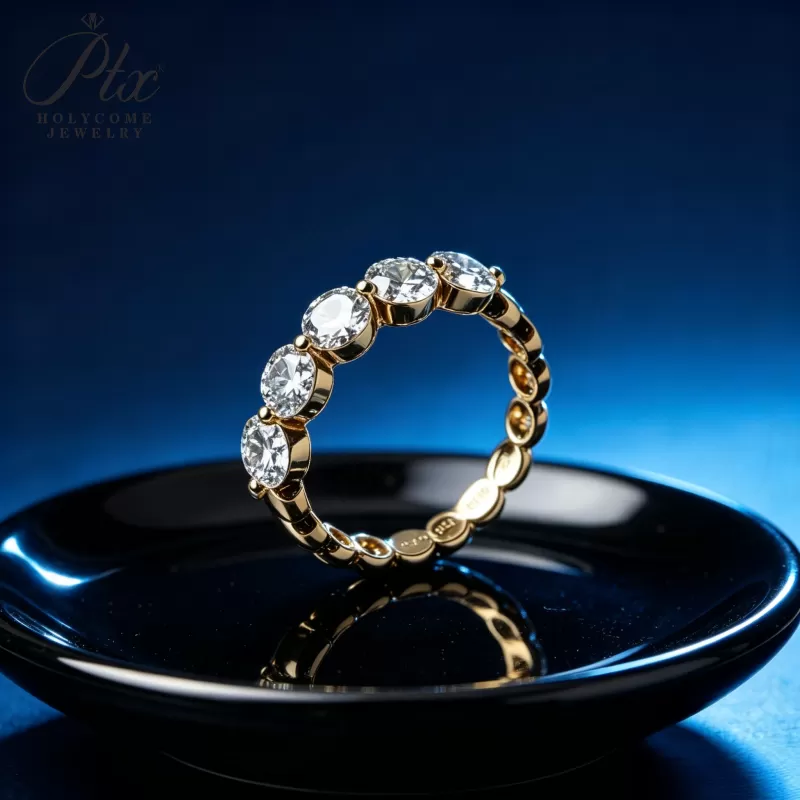
You have narrowed the supplier down to two factories. The photo galleries look the same, the price lists are within 5 percent, and the sales rep answers on WhatsApp. The next step is a sample order, and most buyers treat it as a purchase: they pick two pretty rings and wait. A useful sample order is not a purchase. It is a five-point test that tells you whether the factory can actually reproduce what the photo shows at bulk quantity. Get this right and the 500-piece PO is safe. Get it wrong and the first bulk shipment becomes a return problem.
Test the plating, not just the stone
The photo shows a bright white rhodium ring. The sample arrives and the plating looks fine under the showroom light. Two weeks later it is yellow at the high points. Plating is the single most common sample-to-bulk gap, because sample pieces are often hand-plated with extra thickness while bulk pieces go through a faster barrel process. To test it properly, wear the sample daily for two weeks, spray it with perfume, wash hands over it, and photograph it weekly. If the sample survives two weeks, bulk will survive the customer's first month. For plating options across silver stock, our silver earring plating guide shows what to ask for.
Test the setting and the clasp feel
Run a fingernail across every prong on a sample ring and every stone on a sample bracelet. Any stone that moves is a setting problem that will scale to every piece in bulk. Open and close the clasp twenty times. A snap clasp that already feels soft on the sample will fail on the 500th piece. The 16 CFR Part 23 jewelry guidance sets the labeling standard you should also check: stamps on the inside of bands and proper metal purity marks should be present on the sample, because if they are missing on the sample they will be missing on bulk.
Test the packaging and the paperwork
Open the sample box the way your customer would. Does the piece arrive in a stamped pouch, a generic poly bag, or a crushed box? Packaging is where factories cut corners and where small stores lose the perceived value of a 60 USD ring. Ask for the retail packaging option on the sample order, even if it costs more per piece, so you can price it into your retail markup. For private label options on tags and cards, our private label packaging guide covers what is realistic at low MOQ.
Test the lead time and the communication
The sample order is also a timing test. Note the date the sample ships, the date it clears customs, and the date it arrives on your desk. Compare that against the bulk lead time the sales rep quoted. A factory that misses the sample lead time by a week will miss the bulk lead time by two. Ask the sales rep to send a production photo mid-way through a small reorder, and judge whether that photo matches the sample. For realistic MOQ expectations before you place the sample, read our lowest realistic MOQ guide, and for the broader first-order plan see sample order strategy.
The price and payment terms test
A sample order also tests how a factory handles money. Note whether they ask for 100 percent upfront on a small sample, or whether they split the deposit and balance. A factory that demands full payment on a 50 USD sample is telling you something about how they will behave on a 5,000 USD bulk order. Ask whether the sample price includes the retail packaging, the certificate and the shipping, because the first quote often leaves those out. The 16 CFR Part 23 jewelry guidance also reminds you that purity marks must be honest, so check the inside stamp on every sample ring and bracelet before you praise the quality.
Keeping a sample library that pays off
Do not throw the samples away after the test. Keep them in a labeled drawer grouped by supplier, with a one-page note on plating, setting, packaging and lead time. When a second buyer on your team places an order six months later, that note stops them from re-sampling a factory you already rejected. For buyers who compare sample policy across suppliers, our factory returns policy guide pairs naturally with the sample test, because a factory that refuses samples usually also refuses returns.
How many pieces should a sample order include?
Three to five pieces across the categories you plan to buy, not five of the same style. You want one ring, one earring, one necklace and one bracelet, so you can test each production line separately.
Should I pay retail for samples?
No. Most factories discount sample orders by 30 to 50 percent or credit the sample cost against a later bulk PO. Ask before paying full price.
What is the one thing samples never show?
Tarnish in transit. A sample that sits in a drawer for a week does not show how the piece reacts to a 25-day sea freight crossing. Ask the factory for anti-tarnish paper in every bulk box.
How long should I wait before reordering after samples?
Two to four weeks of wear testing, then place a 50 to 100 piece trial order before committing to 500. The trial order catches problems the sample cannot.
Ordering your first sample? HOLYCOME sends 3 to 5 piece sample packs with plating, setting and packaging options shown on each piece, and credits sample cost against your first bulk PO. Tell us the categories you want to test and we will pack a sample box built around your retail price point.
Frequently Asked Questions
How do I verify a factory before placing a bulk order?
Request a production video, business license, export records and a paid sample run. A factory that accepts a 50-piece test order is usually a real manufacturer.
What payment terms do you offer?
30% T/T deposit with the balance against the bill of lading. This protects both sides on first orders and can move to net terms after a track record.
What is your normal reject rate?
3–5% under 10x loupe inspection for cast and set pieces. Defective units are replaced free in the next shipment.
Where is the factory located?
Wuzhou, Guangxi, China—the core lab-grown and moissanite manufacturing cluster. Shipments go via Guangzhou or Shenzhen ports.