K Gold Jewelry Wholesale Pricing Tiers
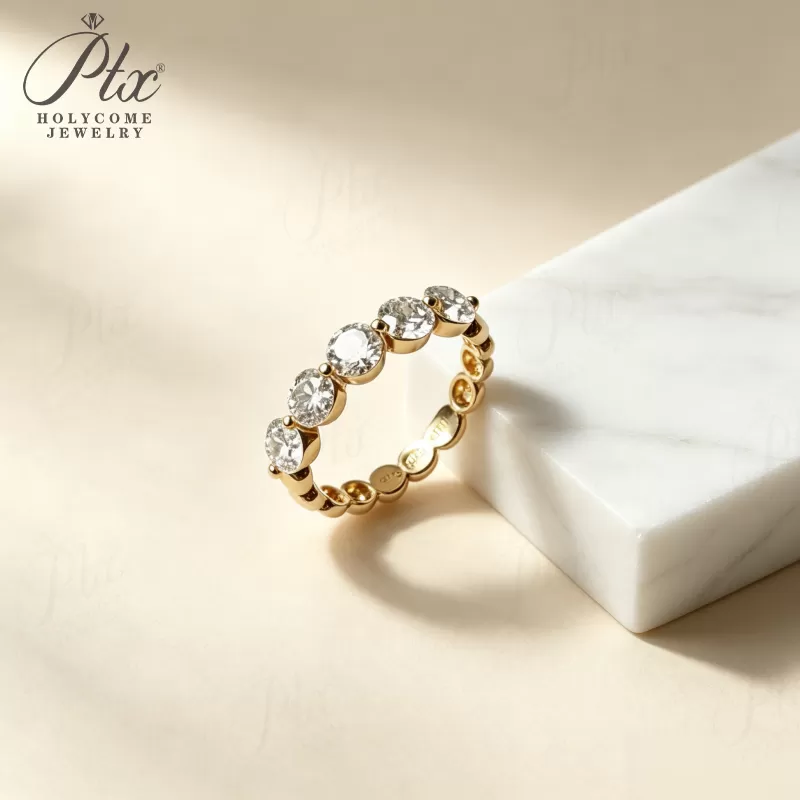
You get two quotes for the same ring: one at $28.50 in 925 silver rhodium-plated, one at $86 in 10K yellow gold. The gold quote looks steep until you remember that 10K carries 41.7 percent pure gold weight, and the spot price of gold is what it is. Wholesale K-gold pricing is not a single number; it is a ladder built on karat, gram weight, plating and labor, and guessing which rung to buy on leaves margin on the table.
The three K-gold pricing tiers factories quote
Wuzhou and Guangzhou factories quote K-gold jewelry on three tiers. Tier one is 10K gold at 41.7 percent purity, used mainly for US mass-market bridal and everyday rings. Tier two is 14K gold at 58.3 percent purity, the dominant fine-jewelry tier in the US and Australia. Tier three is 18K gold at 75 percent purity, concentrated in EU and Middle Eastern luxury retail. The price difference between 10K and 14K on the same design is roughly 35-45 percent at FOB, because the gold content per gram moves from 0.417 to 0.583. The karat fineness system is standardized, so the gold content on a 14K stamp is not negotiable between factories. On top of gold content, factories add a labor and casting fee that runs $4-12 per piece depending on complexity.
How gram weight moves the price
A 14K solitaire ring that weighs 1.8 grams costs less than the same ring at 2.6 grams, even though the stone and the design are identical. The price delta is the gold differential: at a $60 per gram pure-gold equivalent, moving from 1.8 g to 2.6 g adds roughly $28 of gold cost at FOB. Retailers who sell online often choose the lighter gram weight to keep the ticket under $199, while brick-and-mortar jewelers prefer the heavier weight because it feels substantial in the hand. Read our breakdown on 14K gold ring weight and wholesale pricing before negotiating. For karat choice by market, see karat choices by market.
The surcharges buyers forget
Three surcharges appear on a K-gold PO but not on the factory catalog price. The first is rhodium plating on white gold, usually $0.80-1.50 per piece. The second is stone setting for side stones, $0.50-2.00 per stone depending on size. The third is the assay stamp and certificate card, about $0.30 per piece for 10K and 14K. Add these to the base price before you compare two factories. Buyers who want to see how price layers on bracelets should read K-gold bracelet wholesale price by weight.
Which tier to buy for which retail price band
If your retail ticket is under $199, buy 10K. If the ticket is $199-499, buy 14K. If the ticket is over $499 and your customer expects fine-jewelry paperwork, buy 18K with an NGTC or equivalent assay certificate. Buying 18K for a $299 ticket destroys margin; buying 10K for a $599 ticket invites is this real gold complaints. Pick the tier before you pick the design, not after.
Gold color is the second pricing variable after karat. Yellow gold needs no plating and ages well. White gold requires rhodium plating, which adds cost every time the piece is re-polished. Rose gold, the third option, uses copper in the alloy and is popular in vintage-styled bridal lines. When you compare two factory quotes, make sure both are for the same gold color. A 14K yellow gold ring quoted at $86 is not directly comparable to a 14K white gold ring quoted at $94; the gap is the rhodium plating, not a markup.
Why is 14K more popular than 18K in the US?
14K is harder and more scratch-resistant than 18K, which matters for everyday wear, and the price point sits where US bridal budgets live. 18K is softer and shows wear faster, so it is reserved for luxury pieces.
Is 10K gold considered real gold?
Yes, 10K is legally gold in the US at 41.7 percent purity, and it carries a 10K or 417 stamp. It is the lowest karat sold as solid gold in the US market.
How often do gold prices move the wholesale quote?
Factories typically fix the gold component for 7 days on a quote. If your PO takes longer to confirm, ask the factory to lock the gold price in writing; otherwise the price will float with spot.
Do K-gold pieces need hallmarking for Europe?
Yes. Pieces sold into the UK, Italy and France need a national assay mark, and pieces sold into the EU must meet REACH nickel and cadmium limits. Confirm the factory can supply the paperwork before ordering.
Sourcing K-gold inventory? HOLYCOME ships 10K, 14K and 18K moissanite and plain gold jewelry from Wuzhou and Guangzhou workshops, with assay stamps and option cards. Send your target retail band and we will quote the right karat tier within 24 hours.
Frequently Asked Questions
What gold purities and platings do you offer?
Solid 10K, 14K and 18K, plus gold-filled and vermeil. Plated fashion lines use 1–2 micron PVD over brass or 316L.
How do I avoid mislabeling gold products?
Label by construction: solid, gold-filled, vermeil or plated. Mislabeling plated as vermeil is the most common compliance complaint in this category.
Can you stamp karat marks?
Yes. Every solid-gold and vermeil piece is stamped with karat and maker marks, which supports customs and resale claims.
What is the MOQ for gold lines?
50 pieces per design for stock settings; custom CAD work starts at 100 pieces.