Lab Grown Diamond Wholesale IGI Pricing
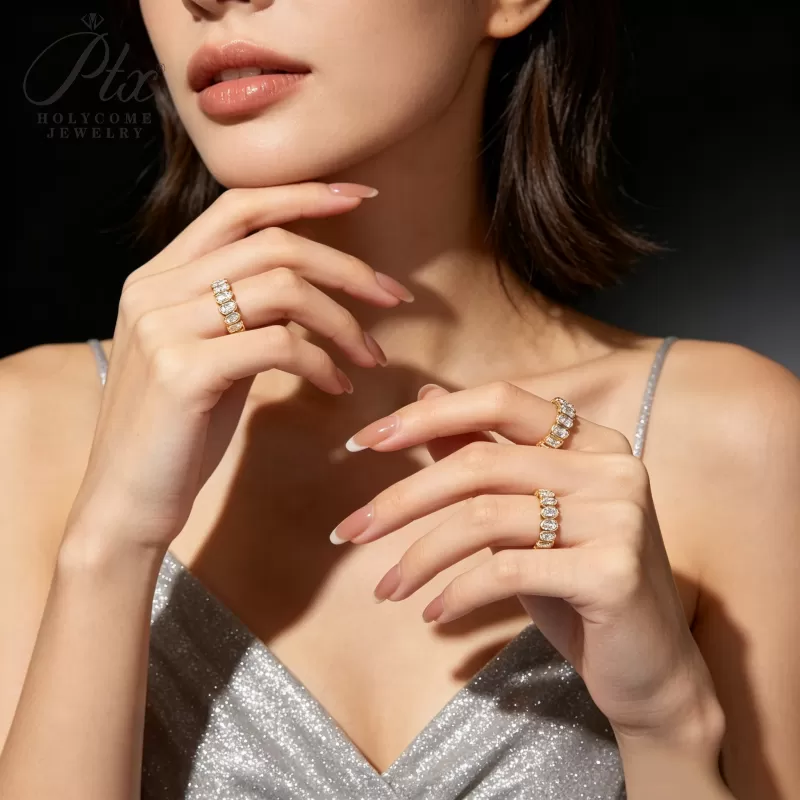
Lab-grown diamonds have moved from a boutique curiosity to the volume side of engagement retail in less than a decade. Buyers who source them wholesale face a different paperwork problem than they do with moissanite: the stone itself carries a grading report, and the report dictates the retail price. A 1 carat IGI-certified lab diamond sells for a measurably different price than the same-looking stone without a report, and retailers who do not understand the difference either overpay or underprice themselves out of the bridal conversation.
What a lab-grown diamond is, and the two growth methods
Lab-grown diamonds are physically, chemically and optically identical to mined diamonds; they are produced in a high-pressure high-temperature (HPHT) chamber or a chemical vapor deposition (CVD) reactor. The lab-grown diamond entry on Wikipedia covers both growth methods, the grading equivalency to mined stones, and the post-growth treatment steps such as irradiation and annealing that fancy-color lab diamonds commonly receive. For a buyer, the growth method matters less than the grading report, because the report is what the customer uses to compare against mined options online.
Why IGI papers decide the retail price
The International Gemological Institute (IGI) grades lab-grown diamonds with the same 4Cs framework used for mined stones. A customer shopping a 1 carat round lab diamond will compare the color grade, clarity grade, cut grade and fluorescence line by line against mined alternatives. An IGI report with a laser inscription on the girdle lets the retailer defend the price in a way that a no-paperwork stone cannot. Wholesale buyers should treat "no IGI" as a different product category: it sells at fashion-jewelry prices, not bridal prices.
Pricing by color and clarity
Lab-grown diamond wholesale pricing moves on color and clarity, with cut as a secondary factor. At the 1 carat round size, a D-VVS2 stone commands the top of the per-carat band; an E-VS2 stone sits in the middle; an F-SI1 stone is the volume tier; a G-SI2 stone is the entry bridal tier. The cut grade matters at the top end because an Excellent cut reads as a better stone in photographs; at the entry tier, a Very Good cut is acceptable and saves money without a visible difference. Buyers should not pay VVS pricing on a stone they will set in a pave halo, because the surrounding small stones obscure the inclusion difference.
HPHT versus CVD: does it matter for retail?
HPHT stones tend to carry a slight brown or gray tint that is corrected by annealing; CVD stones start cleaner but may show growth lines that are visible to a trained grader. At the retail shelf, the customer does not see the growth method; she sees the IGI color grade. Buyers should not pay a premium for "CVD only" unless they have a customer segment that specifically asks for it. The report is the proof, not the growth method.
Treatment disclosure and the FTC angle
The US Federal Trade Commission Jewelry Guides require disclosure of treatments that affect value, including irradiation and annealing on fancy-color lab diamonds. The diamond reference on Wikipedia summarizes that framework. Wholesale buyers should ask the supplier whether the IGI report notes any treatment on the stone, and should carry that disclosure onto the retail tag. Failing to disclose treatment is the single most common compliance complaint in this category.
Verifying the report before you reorder
Before paying the balance on a certified lab diamond order, ask the supplier for the IGI report number and look it up on the IGI verification page. A real report returns the stone carat, color, clarity and cut that match the product sheet; a forged or reused report number does not. This five-minute check is the single most effective guard against a stone that does not match the certificate the customer will be shown at retail.
Frequently asked questions
Do all lab-grown diamonds ship with an IGI report?
No. Wholesale houses carry both certified and uncertified stock. Certified stones cost more but retail at bridal prices; uncertified stones are fashion jewelry.
Which color and clarity moves fastest at retail?
F-SI1 and E-VS2 in the 1 to 2 carat range. These read eye-clean to a customer and avoid the premium the top grades carry.
Is a lab-grown diamond a better buy than moissanite for an engagement ring?
It depends on the customer. Lab diamonds sell on diamond equivalence; moissanite sells on fire and price. Stock both and let the customer choose.
How long does wholesale lab diamond fulfillment take?
In-stock certified stones ship in 3 to 7 days. Custom-cut stones or special colors run 21 to 35 days. See bulk order lead times for the full timeline.
We supply IGI-certified lab-grown diamonds set into 14K white, yellow and rose gold engagement rings, with the report number listed on the product sheet so you can verify each stone before it ships. Send us your target carat band and customer color sensitivity and we will quote a tiered price list. Pair with K gold versus silver moissanite jewelry and tennis bracelets for a complete bridal wall.