Moissanite Jewelry on Vacation: Beach, Pool, and Travel Care
A holiday is exactly when people want their best jewelry on show, and moissanite is well suited to it. The stone is hard, stable, and will not fade under sun, salt air, or a dip in the pool, and it packs tiny compared with a diamond of the same look. But travel is also when jewelry gets lost, tarnished, or damaged more than at home, because the routines that protect it disappear: the dish by the sink, the separate pouch, the weekly clean, the safe storage. A ring that sits in its own box at home gets tossed into a beach bag, a hotel safe, or a checked suitcase on vacation, and that is where trouble starts.
This guide covers how to take care of moissanite jewelry on a trip, from packing it for a flight to wearing it at the beach and the pool. If you want the short version: pack jewelry in a carry-on organizer with individual slots, never in checked luggage; take rings off at the beach because sand scratches silver and sunblock films the stone; skip the pool and hot tub entirely because chlorine weakens settings; wipe pieces down at the end of each day; and clean everything properly when you get home. The rest of this article walks through each of those in detail, including the airport and hotel steps most people forget.
Why Travel Is Hard on Jewelry
At home, your life with jewelry is predictable. You take your rings off to wash dishes, you store them in a known box, and you clean them on a schedule. On vacation, none of that holds. Hands that rarely touch rough surfaces suddenly handle sunscreen bottles, hotel keycards, resort railings, and airplane armrests. Skin produces more sweat in a hot climate, which speeds silver tarnish. And the small habits that prevent loss, a dedicated pouch, a safe spot, a daily check, get replaced by convenience. That is why the most common travel jewelry accident is not a broken stone, it is a lost earring back or a left-behind ring.
Moissanite itself is the least of your worries. It resists scratching from sand, resists fading from sun, and shrugs off temperature changes. The vulnerable parts are the same as always: prongs, clasps, thin chains, and plating. A vacation adds friction, salt, and sunscreen, all of which attack those parts faster than an office environment. The good news is that with a small amount of planning, you can enjoy your pieces and bring them home in the same condition.
Packing Jewelry for a Flight
The first rule of traveling with jewelry is that it never goes in checked luggage. Checked bags get tossed, opened, and lost, and airline insurance rarely covers fine jewelry. Keep every piece in your carry-on, ideally in a small travel jewelry roll with individual zipped slots. These rolls are designed so each piece sits separately and cannot knock against the next, which solves the scratching problem. Moissanite is hard enough to scratch silver and gold, so two loose pieces in the same pouch will mark each other over a long trip.
For carry-on security, you do not need to remove jewelry for airport scanners in most countries, but a metal detector can beep on silver, so be ready to explain. The bigger risk is the tray: rings and bracelets left in a security tray get forgotten. Wear your most meaningful pieces through the scanner on your body if they are small, or put them straight back in your pouch in your bag the moment the tray opens. Never set a ring on the security counter while you gather your laptop; that is how it vanishes.
When you arrive, do not empty your travel roll into a hotel dresser tray where pieces can roll off. Either leave jewelry in the roll, or use the hotel safe. If the room has no safe, keep the roll in your day bag rather than on the bedside table. We cover storage principles more broadly in our notes on moissanite jewelry care, but the travel version is simple: one pouch, one known location, no trays.
At the Beach: Sand, Salt, and Sunblock
The beach is the single harshest environment for a moissanite setting, and not because of the water. Sand is silica, and it is abrasive enough to micro-scratch silver over time, especially when it gets trapped under prongs and you rub the ring without noticing. Saltwater will not harm moissanite, but it leaves a salty film on metal that tarnishes silver overnight if you do not rinse it off. Sunblock and tanning oil are the quiet culprits: they coat the stone in a greasy film that kills the fire, and they are hard to wash off with poolside water alone.
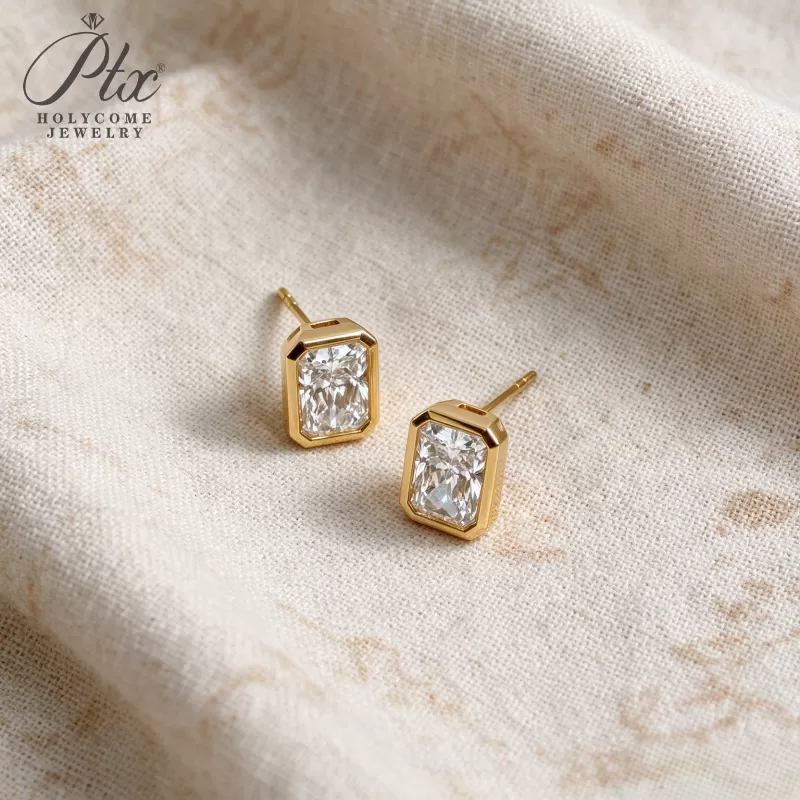
The practical beach rule is to leave your fine moissanite pieces in the hotel and wear a waterproof watch or a simple silver band instead. If you do want to wear something, small studs are the safest choice, because they do not drag in water or sand. Never wear a dangle necklace or a tennis bracelet swimming or lounging, because the combination of lotion, sweat, and saltwater dulls everything fast. If you must wear a ring, take it off before applying sunscreen and put it back on only after the lotion has fully absorbed into your skin.
After a beach day, rinse every piece that touched saltwater or sand under fresh water as soon as you can, even if it is just the shower at the resort. Pat it dry. Salt left on silver overnight is the fastest route to tarnish, and sand ground into a pavé setting is annoying to pick out later. A quick rinse takes thirty seconds and saves a deep clean.
Pool, Hot Tub, and Chlorine Warning
Chlorine is the one absolute no for moissanite settings, and a vacation pool is where most people get caught. The moissanite stone itself is completely unaffected by chlorine, but chlorine attacks the alloys in silver and gold, weakening prongs and solder joints over repeated exposure. The damage is invisible while it happens, so a ring can look fine on day two of a vacation and then lose a stone on day seven because a joint quietly degraded. Hot tubs are worse, because the water is hotter and the chlorine concentration is higher.
The rule is non-negotiable: moissanite jewelry comes off before you get in any treated pool or hot tub. Store it in a pouch by the poolside, not on the edge where it can be knocked in, and not in your swimwear where it can slip out. If you forget and wear your ring in the pool, do not panic, but give it a thorough rinse and check the prongs when you get home. One accidental swim rarely ruins a setting; regular daily pool wear over a week is what does it.
Sea swimming is safer for the metal than a pool, but cold water makes fingers shrink, which is how rings slip off in the ocean. Always remove rings before open-water swimming, and be careful when climbing out on wet rocks, where a hand slip can bend a prong. We explain the chlorine mechanism in our wider moissanite care collection, but on a trip the message is just: pool equals jewelry off.
Your Daily Vacation Jewelry Routine
Travel care does not need to be complicated; it just needs to happen. Build a two-minute habit at the end of each day, while you are getting ready for dinner.
- Rinse rings and studs under fresh water to wash off salt, sweat, and sunscreen.
- Pat pieces dry with a towel; moisture left on silver overnight speeds tarnish.
- Give the moissanite a quick wipe with a microfiber cloth to restore fire after sunblock.
- Return each piece to its own slot in the travel roll, never loose on a nightstand.
- Check that earring backs and clasps are secure after a day of activity.
This routine is easier than it sounds because you are already by a sink getting ready. Skipping it is what leads to that moment on the plane home when you notice your favorite ring is dull and your silver has gone grey. Two minutes at night keeps every piece looking like it did on day one.
What to Wear and What to Leave Home
Overpacking jewelry is a classic mistake. More pieces mean more chances to lose or damage one, and packing for a trip is an exercise in choosing deliberately. Bring two or three pieces that mix and match: a small pair of studs for day, a pendant for dinner, and a dressier ring for evenings. Leave the sentimental engagement ring or your most valuable piece at home in a safe if you are doing a beach-heavy trip, or wear it only for dinners and keep it in the safe during the day.
If you are traveling for a special occasion, a wedding or a proposal, pack the important piece in your carry-on in its own pouch, and carry photos of it for insurance purposes. Consider where you will keep it during beach days and pool days before you arrive, rather than improvising. A little planning means the piece you traveled with actually comes home with you.
Cleaning When You Get Home
Once you are back, do not just unpack your jewelry into its box. Travel pieces collect a layer of salt, sunscreen, and general grime that should come off before storage. Wash every piece in warm soapy water with a soft brush, paying attention to under prongs and along chains. If your silver has tarnished from a humid climate, a quick polish with a cloth restores it, and our guide to silver tarnish cleaning covers heavier cases.
This is also the moment for a quick damage check. Run a finger around each ring's prongs, test each clasp, and look for any bent wire on earrings. Catching a loose stone at home is cheap; discovering it months later after the piece was put away is expensive. A fifteen-minute post-trip clean and check protects the investment you packed so carefully. If your moissanite looks permanently dull after washing, it is usually a thin film of tanning oil that needs a soft brush and a little more time soaking, not a damaged stone. Let it sit in warm soapy water for ten minutes rather than five, and brush gently under the prongs. If your silver has gone grey, a polishing cloth brings it back. The only thing that genuinely needs a jeweler after travel is a stone that moves, a clasp that will not close, or a bent band, and those are rare when the packing and wearing rules above were followed.
Cruise Ships and Resort Stays
Cruises and all-inclusive resorts have their own jewelry risks, and they are worth planning for. On a cruise, your cabin is small, surfaces are slippery, and jewelry gets moved between the pool deck, the dining room, and the cabin. The pool on a ship is heavily chlorinated, so the same no-pool rule applies, and the salt air on deck is constant. Keep your pieces in the cabin safe when you are on deck or in the pool, and bring them out for dinner. Never leave a ring on the pool deck rail or the edge of a hot tub, where a breeze or a splash can send it overboard.
At an all-inclusive resort, the bigger risk is the room safe itself. People pack jewelry into the safe on arrival and forget it on departure, which is one of the most common ways jewelry is left behind. Make a departure checklist that includes the safe, and empty it the night before you leave rather than in the rush of checkout. If you use a hotel safe, test the code yourself before you close it, because a forgotten code means a locksmith and a delayed flight.
For both cruises and resorts, the packing principle is the same: choose a small number of versatile pieces. A pair of studs works for the beach cover-up and the formal dinner. A thin pendant works by day and by night. You do not need a different ring for every meal, and fewer pieces means fewer chances to leave one behind.
Destination Climate and Your Jewelry
Where you travel changes how your jewelry behaves, and a little knowledge prevents surprises. Humid tropical destinations speed silver tarnish, because moisture and salt air are exactly what silver reacts to. If you are heading to a beach climate, pack an anti-tarnish strip or a small silica gel packet in your travel roll, and wipe pieces dry every night. Your silver may go from bright to grey faster than it does at home, and that is normal, not a sign the piece is poor quality.
Cold-weather destinations are gentler on silver but harder on rings. Cold air shrinks fingers, so a ring that fits perfectly at home may spin loosely on a ski trip. That is how rings fall off without you noticing, especially when gloves go on and off. If you travel somewhere cold, check your ring fit often, and consider a ring guard or sizing beads for the trip. Conversely, hot destinations make fingers swell, so a snug ring may feel tight; do not panic, but avoid wearing it on a long hike if it feels uncomfortable.
Dry desert destinations are the easiest on jewelry. Low humidity means little tarnish, and the stone stays bright. The only caution is sun and heat: leave pieces out of a hot car glove box, because prolonged heat can affect adhesives and plating even though the moissanite itself is fine.
Insurance and Receipts for Travel Jewelry
Before you travel with any meaningful piece, spend ten minutes on the boring paperwork. Photograph the jewelry against a ruler, save the purchase receipt and any certificate, and check whether your home insurance or a rider covers loss away from home. Most policies cover jewelry only up to a small limit unless you schedule it, and travel specifically is often excluded. If you are taking an engagement ring on a honeymoon, a scheduled rider is cheap and worth it.
Keep a digital copy of the photos and receipt in your email or cloud storage, not just on your phone, in case the phone is lost. If the worst happens, having a clear photo and a value makes an insurance claim far faster. This is not glamorous, but it is the difference between a lost ring being an inconvenience and being a financial hit. We discuss the insurance side more in our notes on jewelry care and ownership, but for travel the key step is simply: photograph, save, and confirm coverage before you leave.
If Something Goes Missing on a Trip
Even with careful packing, a piece can go missing, and the first ten minutes matter. If you realize a ring or earring is gone, retrace your steps immediately rather than waiting until the end of the day. Hotel housekeeping, resort staff, and cruise crew are used to this, and items left in rooms or by pools are often turned in within hours. Call the front desk, describe the piece, and ask them to check the room safe, the pool area, and the restaurant where you last wore it. Most found jewelry is recovered in the first hour.
If you cannot find it, file a report with the hotel or cruise line and take the reference number, because your insurance will ask for it. Do not delay, because policies often require prompt reporting. This is exactly why the pre-trip photo and receipt matter: you can send the photo to the hotel and to your insurer within minutes. A small moissanite stud is rarely worth a claim, but an engagement ring absolutely is, and having the paperwork ready turns a panic into a process.
Prevention remains better than recovery, and the single most effective habit is a fixed home for every piece. If every ring goes back into the same pouch slot every night, you will notice instantly when one is missing, because the slot is empty. People who lose jewelry on trips are almost always people who set pieces down in different places each day. One pouch, one slot, one habit solves most of it before it happens.
Frequently Asked Questions
Can I wear moissanite in the ocean? The stone is safe in saltwater, but sand can scratch silver and salt left on metal speeds tarnish. Rinse pieces afterward, and always remove rings before swimming because cold water shrinks fingers and rings slip off.
Can I wear my moissanite ring in the pool? No. Chlorine weakens the silver or gold setting even though it does not touch the stone. Remove jewelry before pools and hot tubs to protect prongs and solder joints.
Should I pack jewelry in checked luggage? Never. Keep all jewelry in your carry-on in a travel roll with individual slots, because checked bags are lost or mishandled and rarely cover fine jewelry.
Why does my moissanite look dull after a beach day? That is a film of sunblock, tanning oil, and salt, not damage. Wash it in warm soapy water with a soft brush and the fire comes straight back.
Travel Well, and Bring It All Home
Vacation jewelry care is really about keeping your home habits alive while you are away. Pack in a roll, skip the pool, rinse after the beach, store in one known spot, and clean on return. Do that and your moissanite will come home looking just as bright as the day you left, with no lost earrings and no cloudy stones.
If you are a retailer stocking moissanite for beach-season shoppers, we are a moissanite and 925 silver manufacturer based in Wuzhou, China, and we supply travel-friendly, durable pieces built for warm climates. Our support team at service@holycome.com can help with wholesale orders or care advice. For more on keeping your pieces bright, browse the rest of our jewelry care articles.