Moissanite vs Cubic Zirconia: What the Price Difference Really Buys You
Shoppers comparing moissanite and cubic zirconia, usually known as CZ, almost always start with the price tag. At first glance the gap looks unreasonable. A one-carat-looking CZ stud earring might sell for a few dollars online, while a similar-looking moissanite piece costs noticeably more. The question buyers ask us, at our Wuzhou factory, is why. If both stones look clear and sparkly on a screen, what exactly does the extra money on a moissanite vs cubic zirconia price comparison actually purchase, and is the difference worth it for a retail customer or a wholesale buyer?
This article breaks the price difference into the real engineering and materials reasons behind it. We look at hardness and wear, how each stone handles heat and daily life, how brilliance changes after a year versus after five, what CZ actually costs you over time, and how a wholesale buyer should think about margin and returns. We also compare the two on the lab-grown diamond side so you can place moissanite in the right price band. By the end you will know when CZ is the smart choice and when moissanite is the better value, even though it costs more up front.
We are not here to tell you CZ is bad. It is not. It is an amazing, inexpensive fashion stone that has decorated the world's runways and fast fashion for decades. What we will explain is that the moissanite vs CZ price difference is not marketing fluff. It reflects real differences in crystal structure, Mohs hardness, refractive index, longevity, and the cost of producing a colorless, graded, certified stone that is meant to last years rather than months.
What Cubic Zirconia Actually Is
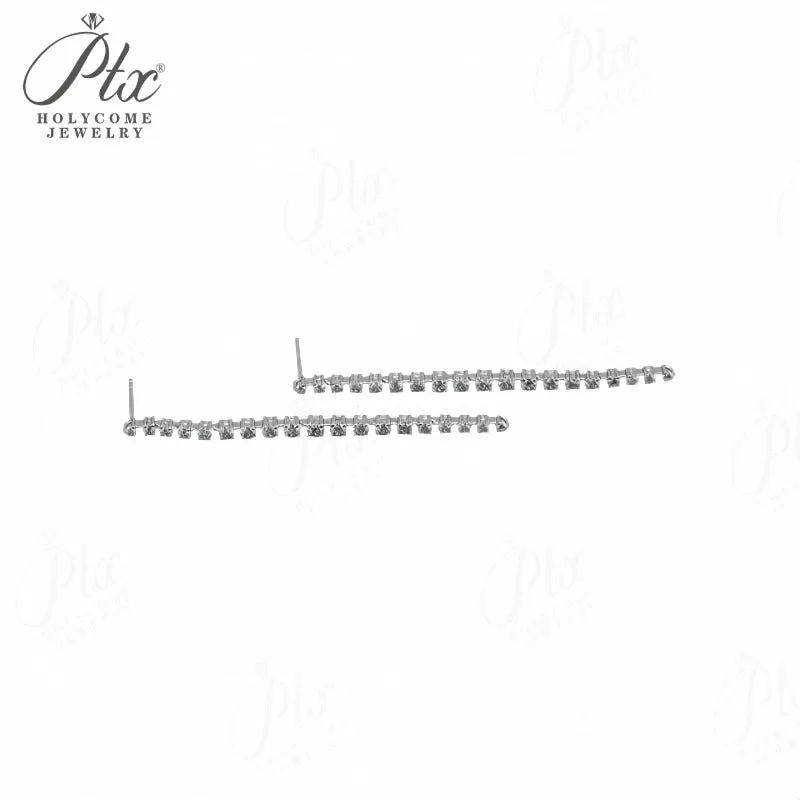
Cubic zirconia is a synthetic, crystalline form of zirconium dioxide. It is grown, not mined, and it has been produced at industrial scale since the Soviet-era pulling methods were adapted for mass manufacturing. Because the raw powder is cheap and the growth process is mature and fast, CZ can be made in almost any size, color, and shape for very little money. That is why a two-carat CZ solitaire can be sold for under ten dollars.
The tradeoff is in the physics. CZ is relatively soft, around 8 to 8.5 on the Mohs scale, which sounds high until you remember that moissanite sits at 9.25 to 9.5 and diamond at 10. More importantly, CZ is porous at a microscopic level and absorbs skin oils, lotions, and soap residue over time. Within months a once-bright CZ begins to look dull, slightly gray, and heavily scratched on the facet edges. That is not poor quality control. It is the material.
CZ is also often coated. Many cheaper CZ stones are given a thin optical coating to boost fire or to fake a higher color grade. That coating wears off. Once it goes, the stone looks flat and glassy. When a customer returns a CZ ring after two months saying it lost its sparkle, the retailer is almost always seeing exactly this, a worn coating on a soft, oil-absorbed stone.
What Moissanite Actually Is
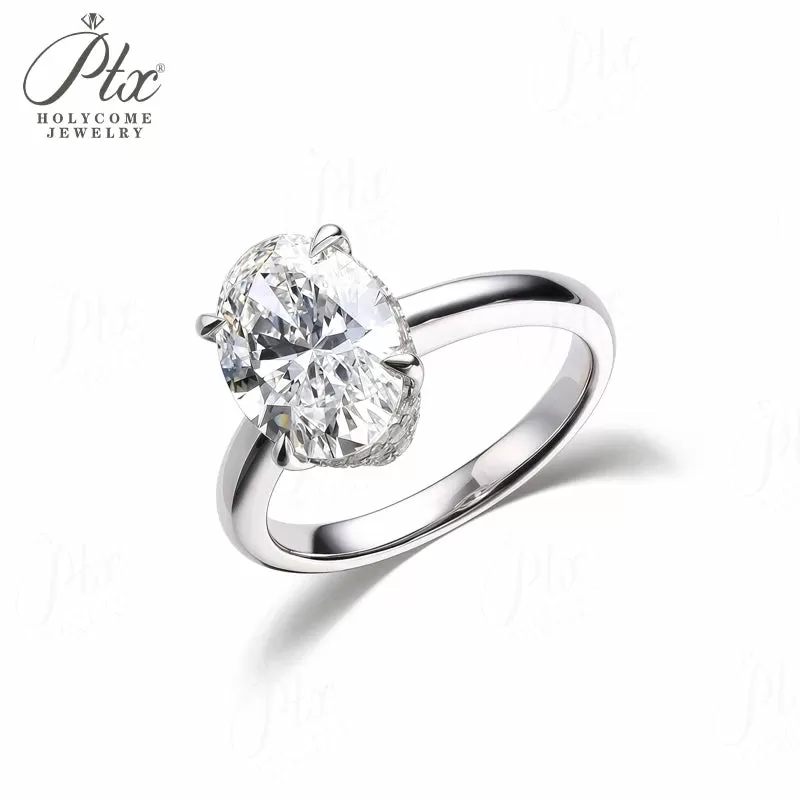
Moissanite is silicon carbide, a mineral first identified in a meteor crater and now grown in controlled laboratories. Natural moissanite is so rare it is essentially irrelevant to jewelry, so every moissanite you see is lab-created. The growth process is slower, more energy-intensive, and requires tighter control than CZ growth. Crystal defects must be kept near zero because even small inclusions show up in a graded, colorless stone.
The material itself is in a different performance league. Moissanite registers 9.25 on the Mohs scale, second only to diamond among commonly used gemstones, and it is actually harder than diamond in two of three crystal directions. It is thermally stable, chemically inert, and does not absorb skin oils. Its refractive index is higher than diamond, which is why a well-cut moissanite can throw more rainbow fire than a same-size diamond. Learn more about how that performance is priced in our guide to moissanite pricing and cost per carat.
A quality moissanite is also color-graded and often paired with a GRA certificate. That means the buyer is not gambling on whether the stone looks white enough. They know it falls in a D, E, or F color band, that the clarity is VVS, and that the cut meets a published standard. CZ is almost never graded this way, because the grading would not survive the first few months of wear. The price difference between the two stones is, in part, the price of a stone that will still look the way it did on day one.
Hardness and Everyday Wear
The single biggest reason moissanite costs more is that it survives contact with the world. Think about what a ring actually encounters: keys in a handbag, a phone screen, a desk edge, a gym weight, a door frame. Every time a stone touches something harder than itself, it micro-scratches. Over a year those scratches add up to a cloudy, dull surface that no amount of cleaning fully restores.
CZ, even at 8 to 8.5 Mohs, scratches faster than customers expect. A CZ ring worn daily often looks tired within three to six months. Moissanite, at 9.25, scratches very slowly. A daily-worn moissanite ring still looks clean and bright after five years, because the scratches are fine and infrequent. This is not a subtle difference you notice on day three. It is the difference between replacing a ring every season and wearing the same ring for a decade.
For a wholesale buyer this matters enormously. A retailer who sells CZ engagement rings will see returns, complaints, and bad reviews as stones dull within the first months. A retailer who sells moissanite sees repeat customers and referrals, because the product still looks like the photograph a year later. The lower CZ price looks attractive on the first invoice, but the support cost and reputation cost eat the margin quickly.
Brilliance and Fire After Months of Wear
On the display tray, a CZ and a moissanite can look strikingly similar. Both are colorless, both are faceted, both catch the light. The divergence happens over time and under different lighting. CZ has a lower refractive index, so even when new its sparkle is a little whiter and flatter. Moissanite has higher dispersion, meaning it splits light into brighter rainbow flashes that customers call fire. A well-cut moissanite in sunlight throws more color than a diamond of the same size.
After several months the gap widens. CZ dulls from scratches and oil absorption, and the coating fades, so the fire it once had fades with it. Moissanite does not oxidize, does not absorb oil, and its surface stays crisp. The facets remain sharp, so the light return stays high. Cleaning a moissanite once a month with mild soap brings it back to like-new. Cleaning a neglected CZ brings it back only part of the way, because the dullness is physical, not just dirt.
Wholesale buyers often ask us to send side-by-side samples. The difference is visible within ten seconds when you tilt a new CZ, a worn CZ, and a worn moissanite under a lamp. The worn CZ looks like glass. The worn moissanite still looks like a premium stone. That visual gap is what customers pay for after the sale, and it is what justifies the higher moissanite price in the long run. We cover this in more detail in our article on moissanite vs diamond for wholesale buyers.
The Real Cost of Cheap CZ Over Time
To compare price fairly you cannot look at the first purchase. You have to look at what two people spend over five years. Person A buys a five-dollar CZ stud earring. Within four months it looks gray and scuffed, so they buy another. Over five years they buy perhaps ten pairs, spending fifty dollars in total, and end up with ten pairs of tired-looking earrings at the bottom of a jewelry box. Person B buys a forty-dollar moissanite stud once, and it still looks new after five years.
The same math applies to a fashion ring. A CZ cocktail ring for twelve dollars is a fun, disposable accessory. Nobody would argue it should last. But if the buyer actually wanted something they could wear to work, to dinner, and on weekends for years, the CZ has to be replaced again and again. The per-year cost climbs until the cheap stone is no longer cheap at all.
For a retailer, this is also a margin story. CZ can be sold at a tempting entry price, but it generates a steady stream of warranty questions and reviews mentioning the stone lost its shine. Moissanite carries a higher ticket but a far lower complaint rate. When we help retailers price their moissanite lines, we usually point out that the repeat-order rate on moissanite is what makes the category profitable, not the one-time markup. That is the honest factory view.
Heat, Chemicals, and Daily Life
CZ is sensitive to heat and chemicals in ways that surprise people. It can craze or crack under sudden temperature changes, and it is attacked by some household chemicals, perfumes, and even some jewelry cleaners. A CZ ring left on a bathroom counter near hairspray can cloud within weeks. A moissanite is unaffected by perfume, chlorine, sunscreen, and most household products. It can even survive the high heat of a soldering repair, which CZ cannot.
This durability is why moissanite is recommended for engagement and wedding rings, pieces that are never taken off. CZ is better treated as a jewelry-box rotation piece, worn for an evening or a season, then retired. If you never take a ring off, the stone that contacts lotion, hand sanitizer, dish soap, and sweat every day needs to be the chemically stable one.
Wholesale buyers sourcing for a bridal line should note this directly. Bridal customers expect their rings to be worn continuously and to look good on their anniversary photos. Selling a CZ as a bridal stone sets an expectation the material cannot meet. Moissanite is built for that exact use case, and the price reflects the engineering required to make a stone that can live on a finger twenty-four hours a day.
How the Price Actually Breaks Down
A one-carat-equivalent CZ stone costs a factory only a dollar or two to produce. A comparable, graded, colorless VVS moissanite costs significantly more to grow, cut, grade, and certify. The growth cycle is longer, the yield of flawless crystals is lower, and each stone is inspected and assigned a color and clarity grade. The cutting itself is more expensive because moissanite is brittle in places and requires skilled faceting to bring out its fire.
Then there is certification. A GRA report adds cost, but it also lets a retailer sell the stone with confidence, telling the customer the color is D-F and the clarity is VVS. We explain what that certificate means in our article on GRA certification for wholesale buyers. CZ is almost never certified because the grading would be meaningless within months. The certificate is part of the moissanite price, and it is part of the value.
When you see a moissanite ring at a retail store for a few hundred dollars and the CZ version next to it for twenty, remember the stone itself is only one component. The silver setting, the finishing, the certificate, the packaging, the warranty, and the retail overhead all stack up. But the underlying stone cost difference, from a Wuzhou factory perspective, is real and it is justified by performance. We are not comparing a luxury good to a commodity for no reason. We are comparing a multi-year stone to a seasonal one.
| Attribute | Cubic Zirconia | Moissanite |
|---|---|---|
| Mohs hardness | 8 to 8.5 | 9.25 to 9.5 |
| Time to dull in daily wear | 3 to 6 months | Years, with routine cleaning |
| Heat resistance | Prone to crazing | Highly stable |
| Oil absorption | Absorbs skin oils | Inert, does not absorb |
| Certification | Rarely graded | GRA color and clarity graded |
| Typical retail price, 1 carat look | Very low | Mid-range |
| Best use | Seasonal fashion | Bridal and everyday wear |
When CZ Is the Right Choice
We want to be balanced. CZ is absolutely the right call in several situations. If you are buying a costume ring for a single event, a photoshoot, a runway show, or a trendy seasonal look, there is no reason to pay moissanite prices. CZ looks fantastic when new, and if you will wear it a handful of times, it will not have time to dull. The low price is a feature, not a flaw.
CZ is also ideal for jewelry where the setting is the statement. A bold sculptural ring where the stone is a small accent does not need a five-year stone. Fast fashion brands use CZ brilliantly for this reason, and they are not making a mistake. They are matching the material to the product lifecycle.
For a wholesale buyer, CZ belongs in a clearly priced, disposable fashion tier. The problem only starts when CZ is marketed as an engagement stone or a forever piece. If your product says affordable fashion, CZ is honest and profitable. If your product says bridal promise, moissanite is the material that keeps the promise. We discuss how to position both in our piece on whether moissanite is worth the price.
When Moissanite Is the Right Choice
Moissanite is the right choice when the piece matters. Engagement rings, wedding bands, anniversary gifts, graduation presents, right-hand rings that are worn daily, studs that never come out, necklaces layered over everyday clothes. These are pieces the buyer wants to look beautiful for years, and the per-year cost of a moissanite stone is lower than repeatedly replacing CZ.
It is also the ethical choice for buyers who do not want mined stones. Moissanite is lab-grown, conflict-free, and produced without the environmental and labor concerns attached to some diamond mining. For a customer who wants a big, bright, colorless center stone without the five-figure diamond price, moissanite delivers emotional value that CZ cannot match. The buyer is not just buying sparkle. They are buying a story that holds up.
For retailers, moissanite opens a customer segment CZ cannot reach: people who want a serious ring at a thoughtful price. A shopper who would never pay diamond prices but wants more than a costume piece is exactly the moissanite customer. That customer will pay the higher price, return for gifts, and recommend the store. The factory-direct advantage we offer from Wuzhou is that we make these stones at prices that let retailers earn a healthy margin without scaring the buyer.
What Wholesale Buyers Should Stock
If you are a retailer or boutique buyer, the smartest move is to carry both stones in clearly separated tiers. Keep CZ for the impulse, fashion, and costume lines where price drives the sale. Keep moissanite for the bridal, anniversary, and gifting lines where quality and longevity drive the sale. Do not try to compete on CZ price with giant online marketplaces. You will lose. Compete on moissanite value, where the product difference is obvious and the margin is healthier.
When you source moissanite, pay attention to color grade and certification. A D-F color, VVS clarity stone with a GRA report will sell for more and return fewer complaints than an ungraded, yellowish moissanite. Our article on moissanite color grades for retailers explains how to read the difference. Buying from a factory in Wuzhou means you cut out layers of middleman markup and can offer the stone at a price customers are happy to pay.
Finally, set expectations honestly with your customers. Tell them CZ is a seasonal stone and moissanite is an everyday stone. Customers respect honesty, and it dramatically reduces returns. We have found that retailers who explain the wear difference up front sell more moissanite and get better reviews than retailers who pretend both stones are the same. The price difference is not a secret to hide. It is the story to tell.
Frequently Asked Questions
Is moissanite just expensive cubic zirconia? No. They are different materials. CZ is zirconium dioxide, while moissanite is silicon carbide. Moissanite is harder, more refractive, more chemically stable, and lasts years longer. The price difference reflects that.
Does CZ look obviously cheap next to moissanite? When new, CZ looks very similar. After a few months of wear, CZ dulls, while moissanite stays bright. The difference is obvious over time, not on day one.
Can you tell moissanite and CZ apart with the naked eye? On a tray, it is hard. With a loupe or under direct light, moissanite shows stronger fire and sharper facets. Over time the wear difference makes the identification easy.
Is CZ bad for an engagement ring? It depends on expectations. If the buyer wants a disposable fashion ring, CZ is fine. If they want a ring that stays bright for years, CZ will disappoint, and moissanite is the better choice.
Why is moissanite cheaper than a diamond but more expensive than CZ? Moissanite is lab-grown in a mature but precise process, so it costs far less than mined diamond. It still costs more than CZ because growing a flawless, colorless, graded silicon carbide crystal is slower and more demanding than mass-growing CZ.
The moissanite vs cubic zirconia price gap is real, and it is honest. CZ is a wonderful, cheap, seasonal stone. Moissanite is a serious, durable, certified stone built for years of wear. Choosing between them is not about which is better in the abstract. It is about matching the stone to what the jewelry is meant to do. For a one-night outfit, choose CZ. For a ring you will never take off, choose moissanite.
If you are a retailer looking to stock quality moissanite at factory-direct prices, or a customer who wants a stone that stays bright without the diamond price, we are a moissanite and 925 silver manufacturer in Wuzhou, China, shipping worldwide. Write to service@holycome.com for wholesale pricing, samples, and current stock. You can also read more about moissanite resale value over time and our other guides on moissanite value to understand exactly what you are buying.