Moissanite Rings Wholesale Wuzhou
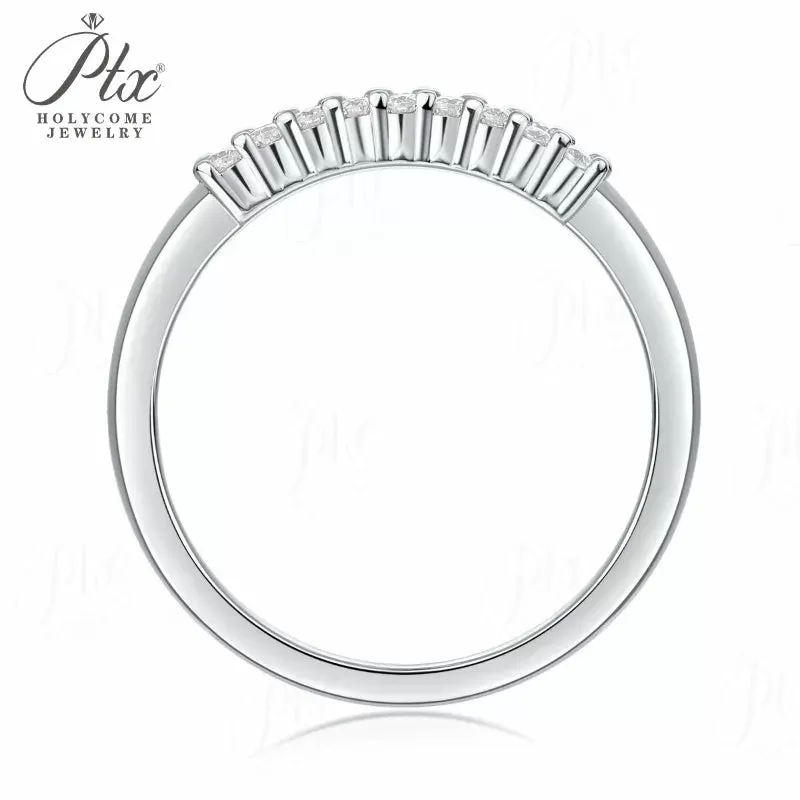
Buyers who fly into Guangzhou and drive three hours west to Wuzhou are not sightseeing. They are going to the place that cuts, rounds, polishes and sets the majority of loose moissanite sold at wholesale prices worldwide. If you buy moissanite rings through a trading company in Yiwu or Shenzhen, there is roughly a sixty to eighty percent chance the stone itself was converted from rough silicon carbide in a Wuzhou workshop, and a strong chance the setting was made there too. Buying directly from the factory cuts one layer out of that chain, but only if you know what to inspect.
Why Wuzhou, and what the town actually makes
Wuzhou, in eastern Guangxi, built its stone industry on cubic zirconia in the nineteen eighties and migrated into moissanite once rough silicon carbide became available at scale. The town now hosts three kinds of operation: stone cutters who sell loose moissanite by the carat, bench jewelers who set stones into sterling and karat mounts, and export trading houses that aggregate both for overseas buyers. Understanding which of the three you are negotiating with is the first deal you make on the ground. Stone-only vendors will not quote you a finished ring at a usable price; bench houses will not sell you loose stones at a per-carat rate; trading houses do both but carry a margin on each.
For background on the material itself, the Moissanite entry on Wikipedia covers the silicon-carbide chemistry, the 9.25 Mohs rating and the thermal-impostor test that separates moissanite from diamond on a diamond tester. Buyers who understand those three facts stop getting confused when a client brings a ring in and the local jeweler tester beeps the wrong thing.
The three stone grades that matter at wholesale
Wuzhou factories sort moissanite into three commercial tiers that move in volume. The entry tier runs at about 4 to 5 on the color equivalent scale and shows minor inclusions under ten-power loupe; it is the stone that goes into sub-$100 retail fashion rings and moves by the thousand. The mid tier, roughly equivalent to G to H color and eye-clean, is the workhorse of bridal boutiques and accounts for most export volume. The premium tier, D-color equivalent with heart-and-arrow optics, carries a GRA certificate and a laser inscription on the girdle, and is the tier that competes directly with low-grade natural diamond on the retail shelf.
Do not assume a factory listing of "D color moissanite" means premium tier until you have held the stone. Ask for a side-by-side loupe photo of your sample against a known D-grade reference. The cost gap between tiers is real, and the retail price you can charge reflects it.
Factory tiers and MOQ arithmetic
A small bench house that sets fifty rings a week will usually ask for a MOQ of 20 to 50 pieces per SKU and will ship in fourteen to twenty-one days. A mid-tier export factory that sets two thousand rings a week will accept mixed designs at a 100-piece total order and will quote a per-piece price 15 to 25 percent lower, but will hold a 30 to 45 day lead time. Match the factory size to your reorder cadence, not to your first order size.
Silver mounts in 925 sterling with rhodium plating are the default MOQ-friendly choice. Karat gold mounts raise the metal weight and the compliance paperwork, and almost every factory will ask for a higher deposit and a higher per-SKU MOQ because gold pricing moves weekly. For more on the metal side, read our guide on K gold versus silver moissanite jewelry for retailers.
Packing, certification and shipping
Each ring should leave the factory in an independent polybag with a size tag, a stone-size tag and a certificate card. Bulk orders ship in a master carton divided into foam trays; rings mixed loose in a single bag arrive scratched. Confirm the factory will apply your own branded card and polybag sticker at no extra tooling cost before you commit, because that is the difference between selling factory-direct jewelry and selling a private-label line. For private-label workflows, see custom OEM jewelry: logo, packaging and private label.
Inspection checklist before you pay the balance
Ask for a pre-shipment photo set: one shot of every ring laid flat, one close-up of the engraving and size mark, and one loupe shot of the stone. Compare stone color across samples in natural daylight, not under the factory cool LED bench light. Confirm the ring size stamp reads 925, the shank is comfort-fit, and the prongs are burnished over the girdle rather than merely touching it. For the wider QC picture, our article on bulk jewelry order lead times from order to delivery walks through the timeline that makes these checks affordable.
Frequently asked questions
How small an MOQ can a Wuzhou factory really accept?
For 925 silver moissanite rings, 20 to 50 pieces per mixed design is workable at the entry tier. Below 20 pieces, expect to pay sample pricing rather than wholesale pricing.
Do Wuzhou factories supply GRA certificates with every ring?
Premium-tier stones carry a GRA card and a girdle laser; entry-tier stones usually do not. Ask which tier the quoted price covers before you compare suppliers.
Can I mix ring sizes in one wholesale order?
Yes. Most factories accept a size split across US 5 through 9, with half sizes in the middle. Send the split on the PO rather than after production starts.
How long does sea freight from Wuzhou to Los Angeles or Rotterdam take?
Freight runs out of Guangzhou or Shenzhen. Typical door-to-door is 28 to 38 days to the US West Coast and 32 to 45 days to the European North Range.
We run a Wuzhou bench house focused on 6.5 mm and 8 mm moissanite solitaire and halo rings in 925 silver and 10K/14K gold. Tell us your best-seller sizes and your monthly reorder cadence and we will send a sample kit, a tiered price list and a lead-time sheet within two working days. Browse the full range of moissanite necklaces and pendants while you are on the site, or open a tennis bracelet wholesale quote in the same conversation.