Wedding Band Value and How to Choose - HOLYCOME
Of all the rings you will ever buy, the wedding band is the one you will wear longest. It goes on in the morning and comes off at night, for decades, through ordinary life. That is exactly why its value should be judged differently from every other ring in your collection. A wedding band is not a statement, not a trend piece, and not an investment. It is a daily companion, and its worth is measured in comfort, durability, and the meaning attached to it, not in how much it costs. This guide explains what a wedding band is really worth, how much you should spend, why silver bands are a sensible choice for many couples, and how to pick one you will still be happy wearing forty years from now. As a workshop that makes everyday bands, we see exactly what survives decades of wear.
The mistake most couples make is choosing the wedding band the way they choose an engagement ring, by prestige and price. That approach often produces a band that is too precious to wear comfortably. This guide reframes the wedding band as the most practical ring you own, and shows how to get a great one without overspending.
Why the Wedding Band Is Different From Every Other Ring
A wedding band is worn constantly, which changes everything about how it should be chosen. An engagement ring sits beside it, but the band itself is the piece that never comes off during the day. It encounters soap, sweat, lotion, dishes, keyboards, and sleep. A ring meant for this kind of daily life must be comfortable, durable, and low-fuss. A delicate, highly decorated band that looks beautiful in a box will annoy you within a week of constant wear. The wedding band rewards plainness, smoothness, and strength more than any other piece of jewelry you own.
This is why many of the world's most-worn wedding bands are simple plain bands. They slide on and off easily, do not catch on clothing, and polish up beautifully. A plain band also never goes out of style, which matters when you plan to wear it for life. The couple who chose a trendy engraved band in 1995 may now wince at it; the couple who chose a smooth classic band still looks at it without regret. When you wear something for decades, timelessness is a feature, not a limitation. The wedding band is the one place where boring is actually best, because boring means it will never embarrass you, never pinches, and never demands your attention when you simply want to forget you are wearing it.
The emotional meaning attached to a wedding band also sets it apart. It is not chosen for how it looks alone, but for what it represents. That meaning makes the band precious regardless of its material. A simple silver band exchanged in a meaningful ceremony carries exactly the same emotional weight as an expensive gold one. This is the deepest truth about wedding bands: their value is mostly symbolic, and no price can add to or subtract from that symbolism. Once you accept this, the pressure to spend a fortune on the band itself disappears. We cover the broader emotional framing in gift and occasion jewelry, but the wedding band is the purest case.
How Much Should a Wedding Band Cost?
There is no right number, but there is a sane default: spend what you can comfortably afford, and prioritize comfort and durability over material prestige. Because the band is symbolic and worn daily, an expensive precious-metal band is not necessary to make it meaningful. Many happy couples wear simple, affordable bands for their entire marriage. The money saved is better spent on a life together than on a band's material. A wedding band that costs a few hundred dollars, chosen with care, is every bit as meaningful as one that costs thousands.
The common advice to spend a large amount on wedding bands is driven by the same industry marketing that inflates engagement rings. It assumes the band must be a precious-metal status object. But for most people, a comfortable, well-made band in solid 925 silver or a modest gold is the practical choice. It lets you begin married life without jewelry debt, and it gives you a band you can actually wear without anxiety. The couple that pays cash for sensible bands starts their marriage on solid financial ground, which is far more romantic than a financed ring.
If you do want a precious-metal band for tradition's sake, that is reasonable. But choose it because the material matters to you, not because you were told you must. A silver band and a gold band can be identical in design, comfort, and meaning; the only difference is the metal's cost. For many modern couples, the silver band is the wiser value, because it is affordable, hypoallergenic, and comfortable for lifelong daily wear. We explain the material tradeoffs in silver versus gold rings, and for a constantly worn band, comfort and low cost often favor silver.
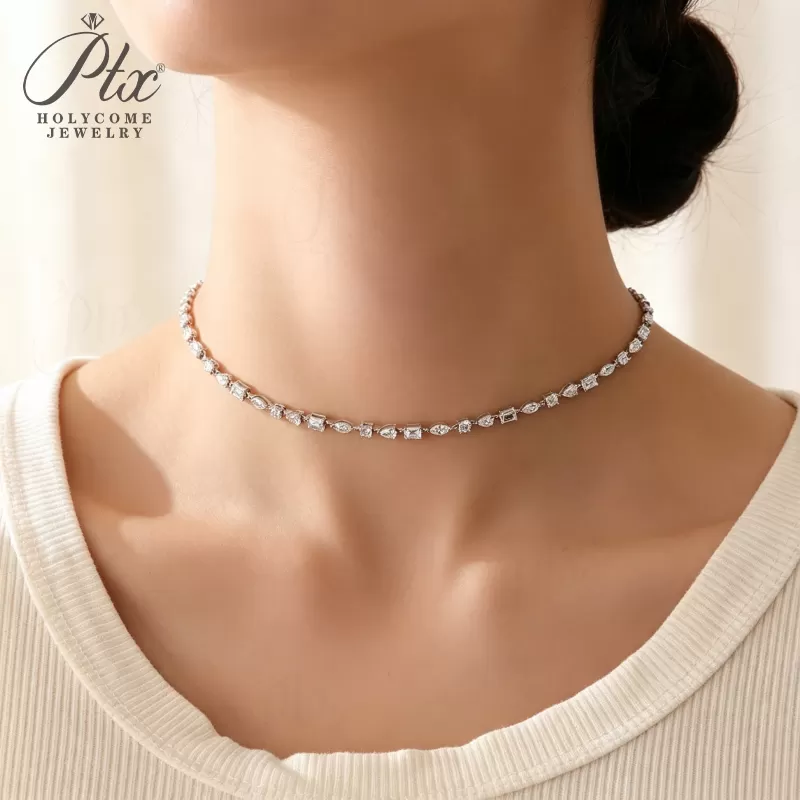
Why a Silver Wedding Band Is a Smarter Choice Than You Think
A silver wedding band challenges the assumption that weddings require gold, but it deserves serious consideration. Solid 925 silver is comfortable, hypoallergenic, and far more affordable than gold. It can be rhodium-plated to a bright white finish that looks elegant and modern. For couples who want a matching set without the gold price, silver bands let both partners wear a beautiful, coordinated band at a fraction of the cost. The symbolism is unchanged. What you save is the gold premium, not the meaning.
The practical concern with silver is tarnish. A band worn constantly will tarnish over time and need occasional polishing. But this is manageable, and many silver-band wearers report that the gentle patina that develops actually feels appropriate for a lifelong band. A wedding band that ages with you, picking up a soft luster from years of wear, tells a story. When the plating eventually wears, it can be reapplied affordably. Compared to the constant anxiety of losing or damaging an expensive gold band, the silver band's simple upkeep is a small price for freedom. You can swim, work, and travel without calculating risk.
Silver bands are also ideal for couples who want matching rings on a budget. A matched pair in solid silver costs what a single gold band might, letting both partners wear something chosen together. That sense of symmetry and shared choice matters more than the metal. And because silver is easy to engrave, you can add dates or initials at modest cost. For couples starting a life together, the value of a matched, engraved, affordable set is high, and silver delivers it without the financial weight of gold. Our guide on measuring ring size helps you get the lifelong fit right the first time.
Comfort: The Feature That Matters for Decades
Because a wedding band is worn daily, its comfort is not a luxury; it is the feature. A poorly shaped band with sharp inner edges will annoy you for decades, and you will wish you had chosen differently. A comfortable band disappears on your finger, and you forget you are wearing it. The difference comes down to the band's interior. A rounded, comfort-fit interior slides easily and does not pinch. A flat, sharp-edged band catches. When you try on wedding bands, notice how the inside feels, not just how the outside looks. The inside is what touches your skin for the rest of your life.
Width matters too. A very wide band feels heavy and can interfere with knuckles; a very thin band bends easily. Most people find a moderate width, three to five millimeters, the sweet spot for lifelong daily wear. It is substantial enough to feel like a band, light enough to forget. The band should also be sized correctly, because a band that is too tight becomes uncomfortable as fingers swell through the day. Get measured properly, and account for daily swelling. A band that fits at the end of a hot day is a band you will never resent. We cover sizing in our fitting guide, and it is worth getting right.
Comfort also means choosing a band you can wear while working. If you use your hands for a living, avoid high-set stones or intricate edges that catch. A plain, smooth band is the working person's best friend. The wedding band you can wear at the gym, the garden, and the office, without taking it off, is the band that fulfills its purpose. Choose comfort above decoration, and decades from now you will be glad you did. The most beloved wedding bands are the ones worn without a second thought, not the ones admired in a box, and that ease is what makes them feel like a natural extension of your hand.
Durability: What Survives Forty Years
A wedding band must survive decades of friction, so durability is a real consideration. The band's metal and construction determine how it ages. A solid band wears slowly and evenly; a thin or hollow band can develop weak spots over years. For constant wear, choose a band with enough thickness to last. Silver is softer than gold, but a well-made solid silver band still lasts for many years of daily wear with reasonable care. It will scratch and develop character, but it will not break. The plating may need refreshing, but the underlying band endures.
Engravings and decorations wear down fastest at the high points. A deeply engraved message will soften over decades, which many couples find beautiful rather than regrettable. If you want engraving to stay sharp, keep it subtle. Avoid settings that can snag, because a caught stone is the most common reason a daily band is removed for repair. The durable wedding band is the one without fragile projections, smooth all around, and made of solid metal. Such a band ages gracefully and rarely needs attention.
One practical durability note: bands worn constantly inevitably scratch. This is not damage; it is the patina of a life lived. A wedding band that stays perfectly scratch-free is one you barely wore. The couple whose bands are softly worn and polished from decades of use are the ones who got their money's worth. Choose a band you are happy to see age. Solid silver, polished occasionally, develops a warmth that looks like shared history. That aging is not a flaw. It is the whole point of a band worn for life.
Matching Bands and Personalization
Many couples want their wedding bands to match, a visual symbol of their partnership. Matching does not require identical rings. It can mean the same width and finish, or the same metal in slightly different profiles. What matters is that the bands feel connected when worn side by side. Modern couples often choose a shared material, like solid silver, and a shared finish, then pick a width that suits each finger. The man's band may be a little wider, the woman's a little slimmer, but the matching metal and style make them clearly a set. That coordination is enough to carry the symbolism, without forcing both people into identical uncomfortable rings.
Engraving is the most personal touch you can add to a wedding band. A date, initials, or a short phrase inside the band makes it uniquely yours, hidden from the world but known to you both. Engraving is affordable in silver, and it deepens the band's meaning without raising its price. Many couples report that the engraving, invisible to anyone else, is the part they value most, because it is a private promise. Over decades, as the outside band wears, the inside engraving remains a quiet reminder. If you personalize only one thing on the band, make it the engraving. It adds meaning without adding cost or fuss.
You can also personalize through the choice itself. The band does not have to be a traditional plain gold circle. Some couples choose a subtle texture, a two-tone detail, or a thin accent. As long as the band remains comfortable and durable, a small personal detail is fine. The trap is adding decoration that catches or wears. A fine texture or a thin milgrain edge ages beautifully and stays smooth. A bulky design with raised elements will catch. Choose personalization that lives on the surface rather than projecting from it, and your band will stay comfortable for life. We discuss design choices in stacking and matching trends, which often inspire wedding band pairings.
Replating, Resizing, and Lifelong Care
A wedding band worn for decades will need occasional care, and knowing this keeps expectations realistic. A rhodium-plated silver band will lose its bright white finish over years of friction, revealing the silver underneath. This is not a problem; it is an affordable refresh. Re-plating a band is inexpensive, and most people do it once or twice over decades. The band underneath remains solid and sound. Similarly, if your finger size changes over the years, a solid silver band can often be resized. These small services mean a well-made band can literally last a lifetime, refreshed as needed.
Daily care for a silver band is simple. Wash it with mild soap and water, avoid harsh chemicals and chlorine, and polish it occasionally with a soft cloth. Because the band is on your hand constantly, it will naturally pick up lotions and oils, which dull the finish. A quick wipe from time to time keeps it bright. You do not need to remove the band for ordinary handwashing; that would defeat its purpose. Just clean it when it looks dull, and it will reward you with a warm, well-loved glow. We cover the routine in tarnish and cleaning, and the short version is gentle soap and a soft cloth.
The lifelong economics favor a solid silver band. Because it is affordable, you do not grieve minor wear, and refreshing it costs little. Contrast that with an expensive gold band, where every scratch feels like a loss and every replating or resizing is a major expense. The silver band lets you relax and wear it freely, which is exactly what a lifelong ring should do. Over forty years, the total care cost of a silver band is tiny, and the freedom to wear it without anxiety is priceless. When you choose it, you are choosing a companion, not an object to protect.
The Band That Outlasts the Trends
There is a quiet dignity in choosing a wedding band that does not try to be fashionable. Trends come and go, but a band worn for life should not be tied to a moment. The couples who wear simple, smooth bands in twenty years from now will look at their hands and see the years, not a dated design. The couples who chose a trendy band in their twenties often replace it or hide it by their forties. When you know you will wear something for decades, choosing against fashion is a form of wisdom. You are picking a companion for a life, not an accessory for a season, and that long horizon should shape every small choice you make about width, finish, and material.
This is why plain bands endure. They are neutral the way a well-cut suit is neutral: never trendy, never dated, always appropriate. A simple silver band goes with every outfit, every occasion, and every stage of life, from young adulthood to retirement. It does not compete with your style; it quietly accompanies it. If you want a touch of interest, a subtle texture or an engraved edge adds character without dating the ring. But the core of the band should be something you would still be happy wearing at seventy. Test that question when you choose: will this still feel right in forty years? If the answer is yes, you have chosen well.
Frequently Asked Questions
How much should a wedding band cost? Whatever you can pay comfortably. Because the band's value is symbolic, an affordable well-made band is every bit as meaningful as an expensive one. Avoid debt for a ring.
Is a silver wedding band acceptable? Yes. Solid 925 silver is comfortable, hypoallergenic, and affordable. It tarnishes and needs occasional polishing, but it wears beautifully for decades and lets you wear it without anxiety.
What width is best for lifelong wear? A moderate width of about three to five millimeters, with a rounded comfort-fit interior, suits most people for constant daily wear.
Should the band match the engagement ring? Matching is a nice tradition, but not essential. Comfort and durability matter more than visual coordination, especially for a band worn daily for life.
The Bottom Line
A wedding band's real value is symbolic and practical, not financial. Choose a comfortable, durable, timeless band in a metal you can afford, prioritize a smooth comfort-fit interior, and wear it daily without anxiety. A well-chosen silver band carries exactly the same meaning as an expensive gold one, at a fraction of the cost, and ages into a beautiful record of the life you share. The band you put on at your wedding should be the band you barely notice on your hand for the next forty years, and that quiet comfort is the truest measure of how well you chose it. Choose it calmly, pay what you can afford, and wear it proudly for decades.
If you want simple, comfortable, engraveable wedding bands in solid 925, our Wuzhou workshop can match pairs and fit sizes. Reach us at service@holycome.com, and browse our 925 silver collection to choose bands you will wear for a lifetime. We measure, engrave, and finish every pair by hand, and we will help you pick a comfort-fit width that disappears on your finger from the very first day. Start your marriage with rings that feel as natural as your own hands, and let them age gracefully alongside the life you build together.