Buying 925 Silver Factory Direct: Where the Real Value Comes From
When a silver necklace costs $120 in a boutique and $45 from a factory-direct source, the question is not which one is better made. It is where the extra $75 actually goes. Most buyers assume the difference is brand, and part of it is, but the real answer is a chain of middlemen, markups, and overhead that sits between the refinery and the customer. This guide pulls back that curtain. It explains what factory-direct silver actually is, why the price gap exists, where the savings come from, what to watch out for, and how both small retailers and individual buyers can use direct sourcing to pay for the piece itself rather than the layer above it.
We are that factory. Every day we cast, plate, and ship sterling silver from our Wuzhou workshop to buyers around the world, and we see exactly how the same physical piece is priced as it moves through the supply chain. This guide shares that perspective honestly, including the caveats. Factory-direct is not magic, and it is not for every purchase, but when you understand where the value comes from, you can use it to buy better silver for less. By the end, you will know whether direct sourcing makes sense for you and how to approach it without the usual risks.
What Factory Direct Actually Means
Factory direct means you buy the finished piece from the manufacturer that made it, rather than from a distributor, a wholesaler, or a retail store. There is no layer in between. You order the necklace from the workshop that cast it, plated it, and stamped it, and it ships to you. The price you pay reflects the cost of material, labor, and a reasonable factory margin, rather than the factory price plus a wholesale markup plus a retail markup plus store overhead. That compression of the supply chain is the entire source of the savings.
Traditionally, factory direct was reserved for large wholesale buyers ordering thousands of pieces. Retail chains bought from importers, who bought from wholesalers, who bought from factories, and each layer added margin. Today, digital communication and small minimum orders have changed that. A small boutique, an online seller, or even an individual can contact a factory directly and order a modest quantity, often with the same per-unit price a large buyer would get a decade ago. This shift is one of the most significant changes in jewelry sourcing, and it is why small retailers can now compete on quality and price in ways that were impossible before.
For an individual buyer, factory direct usually means buying from a factory's online store, where the same maker who produces wholesale pieces also sells to end customers at prices closer to their wholesale cost. You are not usually negotiating a custom order for one necklace; you are buying from the factory's own retail arm, which has far less overhead than a branded boutique. The piece is identical to what they supply to retailers. This is the key insight. The factory is not making a cheaper, lower-quality version for you. It is selling you the same piece it sells to stores, without the store's markup.
Where the Retail Markup Actually Lives
To understand the savings, follow the price of a typical silver necklace. The factory sells it to a wholesaler for perhaps $20. The wholesaler sells it to a boutique for $40. The boutique sells it to the customer for $120. The silver and labor content was maybe $12 to $15. So the customer paid $120 for a piece that cost $15 to make. The $105 gap is split among the wholesaler's margin, the boutique's margin, and the boutique's rent, staff, display, packaging, and marketing. None of those layers is evil; they each provide a service. But they are also layers you can cut by buying closer to the source.
When you buy factory direct, you remove the wholesaler and the boutique. You still pay the factory a fair price for making the piece, plus shipping. What you skip is the cumulative markup. This is why a $45 factory-direct necklace can be identical in silver content, weight, and finish to the $120 boutique version. The difference is not the necklace. It is the two businesses sitting between you and the maker. Understanding this removes the reflex that cheaper must mean worse. Often, cheaper means fewer middlemen, not lower quality.
There are real reasons retail exists. A boutique lets you try pieces on, see them in person, and receive immediate service. Those are genuine benefits, and some buyers happily pay for them. But if you know what you want, are comfortable buying online, or are buying in volume as a retailer, the in-person service is not worth a 300 percent markup. This is the tradeoff. You are choosing convenience and immediacy in one case, and price and selection in the other. Neither choice is wrong. The error is paying boutique prices when you wanted the value of the piece itself, which is a very common mistake.
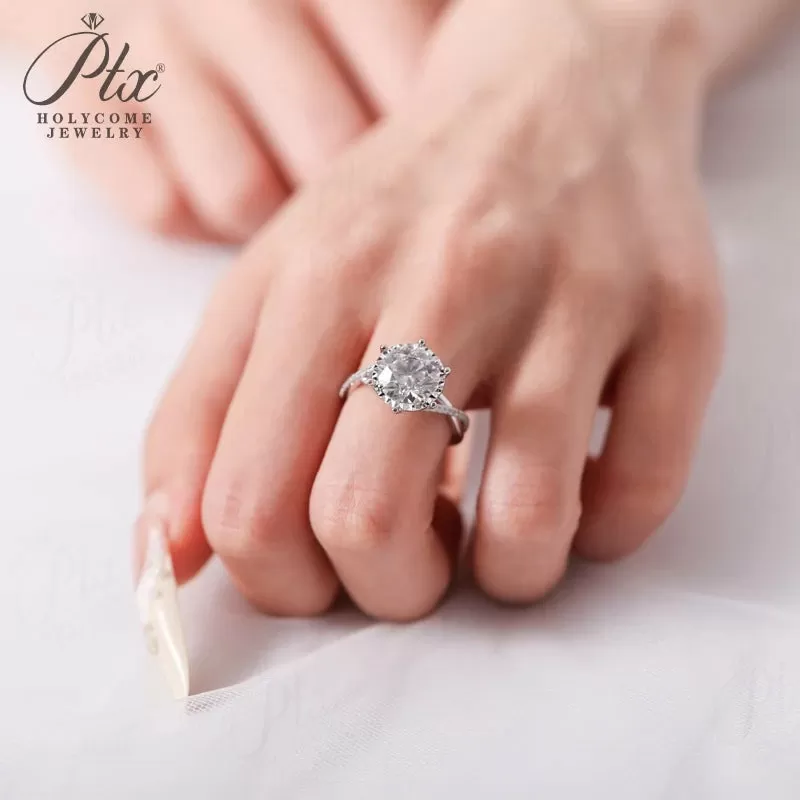
Why Wuzhou Factories in Particular Offer Value
The geography of manufacturing matters to value, and Wuzhou in China has earned its reputation as a silver and moissanite production hub. Concentrated factories like ours benefit from local supply chains, skilled artisans, and efficient production runs, which lower the cost of casting, plating, and stone setting. That efficiency flows into the per-unit price, which is why factory-direct silver from this region consistently undercuts retail centers in Western countries for the same physical quality. You are not getting a lesser product; you are getting the product made where making it is efficient.
This is not about cutting corners. The same 925 alloy, the same rhodium plating, and the same moissanite stones are used, stamped to the same standard. The difference is that labor and overhead cost less in a specialized manufacturing city than in a luxury shopping district. A skilled polisher in a production hub costs far less than a sales associate in a high-rent boutique, and that cost difference is passed through when you buy direct. We explain the regional economics in Wuzhou wholesale hub advantages, but for a buyer the takeaway is simple: the price reflects where the piece is efficiently made, not a compromise in quality.
The value also comes from scale. A factory producing thousands of pieces per day can buy silver, stones, and packaging in bulk, negotiate better input prices, and spread setup costs across large runs. A small boutique cannot do any of that. When you buy direct, you benefit from that production scale. This is why a factory can offer a $30 piece that a boutique would sell for $120. It is not a scam. It is the arithmetic of high-volume, specialized production. Recognizing this lets you buy with confidence rather than suspicion.
What to Watch Out For With Factory Direct
Factory direct is not without risks, and the same compression that lowers price can also hide problems. The first risk is quality inconsistency. Without the boutique inspecting every piece, you must rely on the factory's own quality control. This is why choosing a reputable factory matters. A serious manufacturer photographs, inspects, and guarantees its pieces, while a low-end source may cut corners on plating thickness or stone setting to hit a price. Ask for product photos, certifications, and a clear return policy before ordering.
The second risk is minimum order quantities. Many factories still require a minimum order, which is why individual buyers are usually better served by a factory's retail storefront than by its wholesale channel. For a retailer, MOQs are manageable and are part of the value. For someone buying one necklace, the retail arm of the factory is the right path. We cover the small-order logic in MOQ and factory-direct pricing, but the rule is to match the channel to your order size rather than forcing a wholesale inquiry for a single piece.
The third risk is hidden shipping and import costs. International shipping, customs, and duties can erode the savings if you are not careful. For a single order, factor those in before comparing prices. For larger wholesale orders, the per-unit savings usually overwhelm shipping, but a small personal order should be priced with delivery included. Reputable factories are transparent about shipping costs up front. If a factory hides shipping until checkout, that is a warning sign. The value of direct sourcing is real, but it only holds when you compare total landed cost, not the sticker price alone.
How Retailers Benefit From Direct Sourcing
For small retailers, factory direct is the difference between competing and being squeezed. A boutique that buys from a wholesaler pays $40 for a necklace it can sell for $80, earning a thin margin after rent. A boutique that buys factory direct pays $20 for the same necklace and can sell it for $70, earning a stronger margin while still undercutting the competition. That margin is what lets a small store survive against large chains. Direct sourcing is not a luxury for retailers; it is increasingly a necessity.
Direct sourcing also gives retailers control over their product. Instead of reselling the same generic pieces every wholesaler offers, a factory can help with small customizations, specific plating finishes, private labeling, or exclusive designs. That differentiation is what builds a brand. We see our most successful retail customers use direct sourcing not just for price, but to create a collection that reflects their own identity. Our guide on starting a jewelry business covers how sourcing fits into the bigger picture, but the core advantage is margin and control.
The practical path for a new retailer is to start small. Order a modest mixed sample from a reputable factory, inspect the quality yourself, and test it with your customers before committing to large reorders. This de-risks the relationship and lets you judge the factory's consistency firsthand. The factories that welcome small test orders are usually the reliable ones; the ones that pressure you into large commitments up front are the ones to avoid. Build the relationship gradually, and the direct-source advantage compounds over years.
How Individual Buyers Can Use Direct Sourcing
For an individual shopper, the way to capture factory-direct value is to buy from a factory's own online store rather than from a middleman. Many manufacturers sell directly to end customers at prices that reflect their wholesale cost structure, with far less markup than a branded retailer. You get the same stamped 925 piece, the same plating, and the same stones, shipped from the workshop. The tradeoff is that you cannot try it on in person, so you need to know your size and taste in advance, and you should choose sellers with clear sizing guides and return policies.
The value for an individual is that you can own a better piece for the same budget. Instead of a $120 fashion-adjacent necklace from a mall, you can buy a genuinely well-made, solid silver, stone-set piece directly for $45. Over a wardrobe, that difference lets you own real jewelry rather than aspirational fashion. This is especially true for everyday basics, where you know exactly what you want. A pair of solid studs, a classic chain, or a simple hoop is low-risk to buy direct because the design is timeless and the fit is easy.
The one caveat is service. A boutique offers immediate help, easy returns, and in-person advice. A factory-direct store usually operates online, with support by message or email. If you value that hands-on experience, retail is fine. But if you are comfortable researching online, reading sizing guides, and trusting a reputable maker, the savings are substantial. Our own team at service@holycome.com handles direct buyers every day, and the most satisfied customers are the ones who knew what they wanted and appreciated paying for the piece rather than the store.
The Myth That Cheaper Means Worse
A persistent assumption makes buyers suspicious of factory-direct prices, and it deserves a direct answer. People have been trained to equate price with quality, so a $45 silver necklace feels like it must be inferior to a $120 one. But in jewelry, price reflects the supply chain far more than it reflects the metal. Two identical necklaces, same silver weight, same stone, same plating, can carry wildly different prices depending on how many businesses touched them. The cheaper one is not worse. It is simply sold by fewer layers. Once you understand this, the suspicion fades and the value becomes obvious.
This does not mean every low price is a good deal. There genuinely are low-quality pieces sold cheaply, and you should still judge weight, stamping, finish, and seller reputation. The point is that price alone is not the quality signal people think it is. A well-run factory with efficient production can sell a high-quality piece at a low price and still earn a fair margin. A boutique selling the same piece at triple the price is not selling better silver; it is selling the overhead of the boutique. Learning to separate the two is the key skill that makes direct sourcing work.
The way to build confidence is to order a small test piece first. Choose a factory-direct seller, buy one modest item, and judge it against silver you already own from a retail store. Compare the weight, the stamp, the finish, and how it wears. Most people who do this once never go back to retail prices, because the quality gap they expected never appears. This hands-on test is worth more than any amount of reading. It turns the abstract idea of factory-direct value into a concrete piece you can hold and compare. If you want a sense of the product before ordering, our guide on whether moissanite is worth it shows how we explain value transparently.
Building a Long-Term Direct Relationship
The deepest value of factory direct appears over time, not in a single order. Once you find a reliable maker, you build a relationship with them. They learn your taste, your sizes, and your quality expectations, and they can notify you of new designs, refinish your old pieces, or help with small custom requests. That ongoing relationship is something a boutique chain cannot offer, because you are one of thousands of customers there. With a factory, even a small one, you become a known buyer, and that personal attention improves both the price and the service over years.
For retailers, this relationship is transformative. A boutique that works steadily with one good factory can private-label pieces, refine designs, and develop a product line that competitors cannot easily copy. That is how small brands are built today. It used to require huge capital to design and manufacture jewelry; now a small retailer can collaborate with an agile factory to create a distinctive collection at a reasonable minimum. We see this repeatedly, and it is one of the most rewarding parts of our work. Our article on OEM and custom logo production explains how that collaboration works in practice.
For individual buyers, the relationship matters more subtly. Knowing where your jewelry comes from, being able to ask about a repair, and having a contact for replating creates peace of mind that a disposable fashion purchase never offers. The piece becomes something you can maintain for life rather than replace when it wears. That lasting relationship, combined with fair direct pricing, is the real value that factory direct delivers. It is not just a lower price. It is a reliable, long-term source of well-made silver, sold honestly, for what the piece is actually worth.
One more practical point. When you buy direct, you can also ask questions that a retail salesperson often cannot answer. You can ask what alloy is used, how thick the plating is, how a chain is constructed, or how a stone is set. A factory knows these answers because they make the piece. That transparency is itself a form of value, because you stop buying blind. You learn exactly what you own, and that knowledge makes the purchase more satisfying and easier to maintain over its life. Retailers rarely have that depth of knowledge, which is another reason direct sourcing appeals to buyers who want to understand their jewelry rather than just display it.
Frequently Asked Questions
Is factory-direct silver lower quality than retail? Not when you choose a reputable maker. The same stamped 925 piece is often sold to retailers; the price difference comes from cutting out middlemen, not from cheaper materials.
Can an individual buyer order directly from a factory? Yes, usually through the factory's online storefront. Large custom wholesale inquiries with MOQs are for businesses, but most makers also sell retail-direct to end customers.
Are there hidden import costs? Possibly. Factor in international shipping and any customs duties when comparing total cost. For large orders the savings overwhelm shipping; for small ones, compare the landed total.
How do I know a direct factory is reliable? Look for clear product photos, honest stamping details, a stated return policy, and willingness to answer questions. Avoid factories that pressure you into large upfront orders.
The Bottom Line
Factory-direct silver saves you money because it removes the wholesaler and boutique markup between the maker and you, not because the piece is cheaper to make. The same solid 925 necklace costs far less direct from a specialized workshop than through a layered retail chain, especially in efficient production hubs like Wuzhou. Buyers and small retailers can capture that value, as long as they choose reputable makers, match the channel to their order size, and compare the total landed cost.
If you want to see factory-direct 925 pricing on solid, stamped pieces, our Wuzhou team can walk you through options, minimums, and shipping. Reach us at service@holycome.com, and browse our 925 silver collection to see the value you get when you buy from the maker rather than the middleman. Once you compare the landed total, the choice usually becomes clear.