K Gold Jewelry Wholesale Finishes
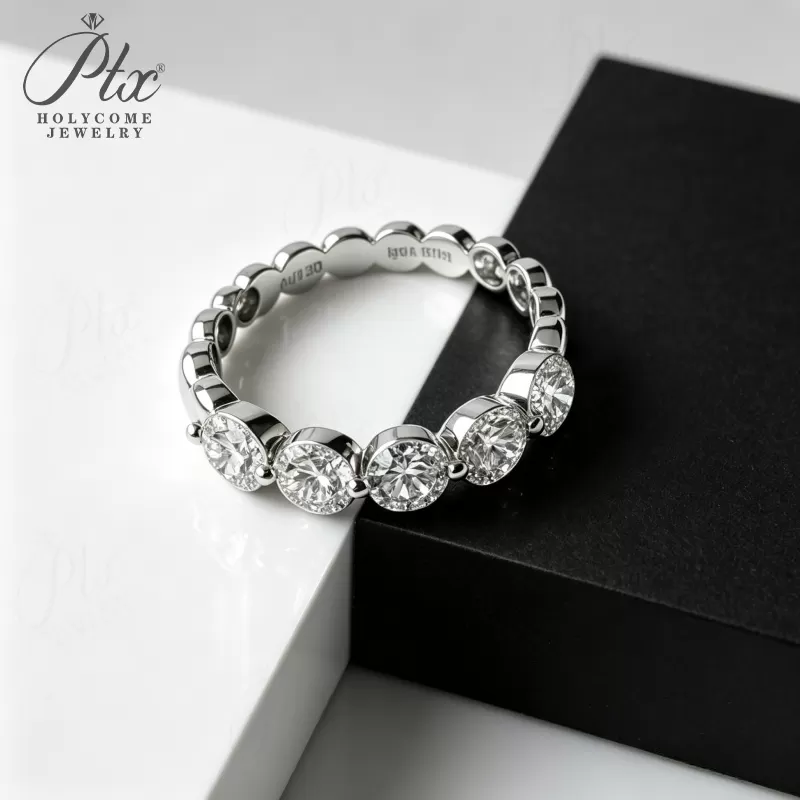
Two 14K gold rings sit side by side, same weight, same stone. One is high-polish and looks like a wedding band. The other is matte sandblasted and looks like a designer piece. The FOB difference is 1.20 USD, and the retail difference is 60 USD. Most wholesale buyers order k-gold jewelry by karat and color, then leave the finish to the factory default. That default is almost always high polish, which is safe but generic. Finish is the lever that lets a small store look like a brand without paying for a designer license.
High polish: the default that still sells
High polish is a mirror finish produced by tumbling the piece with polishing compound, then hand-buffing the high points. It reads as classic bridal and wedding jewelry, and it is the finish that North American and Middle Eastern buyers order by default. It also shows scratches fastest, which is why polished rings return looking worn after six months. The karat of the gold does not change the finish process; 10K, 14K and 18K all take the same polish. If your buyer asks for high polish, they are asking for the safe, recognizable look, not the fashionable one. For the weight behind the finish on a band, see our 14K ring weight pricing guide.
Matte, brushed and sandblasted
Matte and brushed finishes sit in the middle of the finish price ladder, adding roughly 0.80 to 1.50 USD per piece to FOB. Matte is produced by glass-bead blasting, brushed by a fine wire wheel that leaves directional lines. These finishes hide scratches, which is why they dominate men's bands and modern bridal. Sandblasted is a deeper matte with a uniform texture, and it pairs beautifully with a polished edge, which is the two-tone finish you see on Scandinavian-inspired bands. European and Australian buyers lead demand here; US bridal buyers are slower to adopt.
Rhodium flash and white gold
White 14K gold is never white on its own. It is alloyed with nickel or palladium and then rhodium-plated to bring it to a bright mirror white. That plating wears off in 12 to 24 months, which is normal and expected. If you sell white gold, tell your customer that rhodium re-plating is a service, not a defect. The EU REACH nickel directive limits nickel release on items that contact skin, which is why reputable factories now use palladium white gold alloys for EU-bound pieces even though they cost more.
For the karat choice behind the finish, read our k-gold karat choices by market and our 10K versus 14K wholesale price guide before you lock the alloy.
Two-tone and combined finishes
Two-tone work combines yellow and white gold in one piece, or pairs a polished center with a matte edge. It is the finish that commands the highest ticket in the mid-market, adding 2.50 to 4.00 USD per piece to FOB. It also requires more hand work, so MOQs are higher, typically 50 pieces per style rather than 30. Two-tone sells to bridal boutiques and high-gift stores, not to price-driven online sellers. If you are building a gold line for the first time, start with polished yellow and matte white, then add two-tone only after you see which customer segment is actually walking in.
Oxidized and black rhodium: the dark finish
Oxidized gold uses a chemical bath to darken the recesses of a piece, leaving the raised highlights bright. It is the finish you see on Gothic, biker and vintage-inspired mens lines, and it adds roughly 1.50 USD per piece to FOB. Black rhodium is a uniform dark plating used on contemporary unisex jewelry, and it scratches through to the yellow gold underneath on daily wear, which is why it is sold as a fashion rather than heirloom finish. Neither dark finish suits bridal stock, but both open a younger male customer segment that plain polished gold misses. If your store already sells mens bands, a 20 percent dark-finish mix lifts average ticket without cannibalizing the classic line.
What each finish does to the FOB price
High polish is included in the base price. Matte and brushed add 0.80 to 1.50 USD per piece. Rhodium flash on white gold adds 1.00 to 1.80 USD because it is a separate plating step. Two-tone adds 2.50 to 4.00 USD, and oxidized or black rhodium adds 1.50 to 2.50 USD. On a 50-piece reorder these differences look small, but on a 500-piece line they change your landed cost by hundreds of dollars and therefore your retail price. Always ask the factory to itemize the finish upgrade on the quote, because a single blended price hides exactly which finish you are paying for.
Which finish hides scratches best?
Sandblasted matte hides scratches best, because the textured surface breaks up light. High polish shows every micro-scratch, which is why it reads as luxurious on day one and tired by month six.
Does rhodium plating wear off white gold?
Yes, in 12 to 24 months on a ring worn daily. That is normal, not a defect. Offer a cheap re-plating service and you turn a warranty complaint into a small recurring revenue stream.
Is two-tone worth the extra MOQ?
Only if your store already serves bridal or gift buyers. Two-tone is slow for a general boutique; it earns its margin when the customer is already choosing a 500 USD piece.
What finish sells best in mens bands?
Brushed and matte are the mens favorites, because they read as durable and they do not show everyday knocks. Keep polished mens bands as a small secondary option.
Planning a gold finish line? HOLYCOME offers polished, matte, brushed, rhodium and two-tone finishes on 10K and 14K mounts from Wuzhou, with finish samples sent before bulk. Send your target retail range and we will quote the finish upgrade cost per piece.
Frequently Asked Questions
What gold purities and platings do you offer?
Solid 10K, 14K and 18K, plus gold-filled and vermeil. Plated fashion lines use 1–2 micron PVD over brass or 316L.
How do I avoid mislabeling gold products?
Label by construction: solid, gold-filled, vermeil or plated. Mislabeling plated as vermeil is the most common compliance complaint in this category.
Can you stamp karat marks?
Yes. Every solid-gold and vermeil piece is stamped with karat and maker marks, which supports customs and resale claims.
What is the MOQ for gold lines?
50 pieces per design for stock settings; custom CAD work starts at 100 pieces.