Lab Grown Diamond Studs Certified Pairs
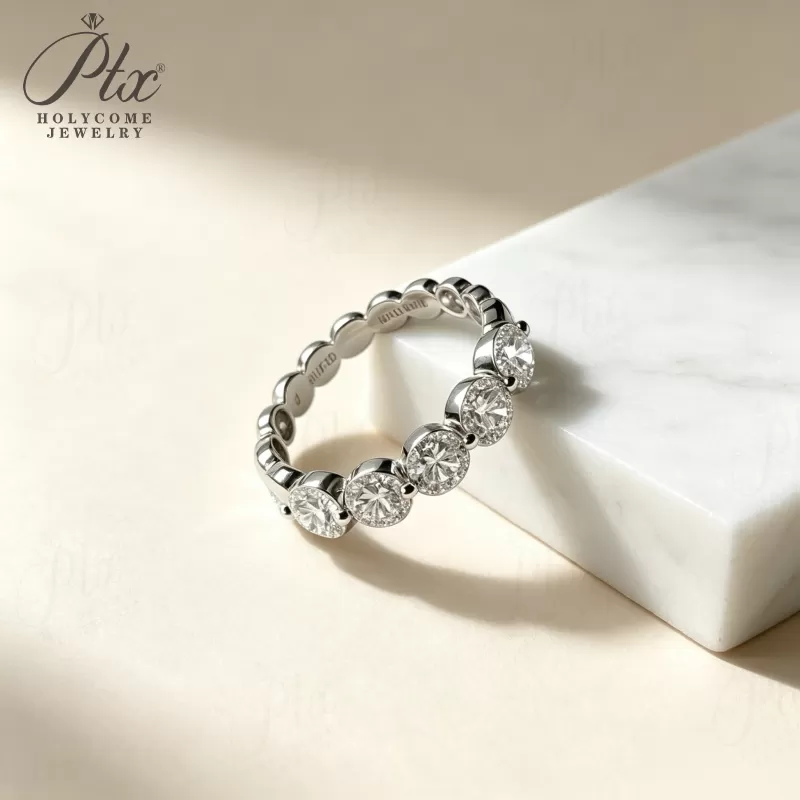
You receive a box of lab-grown diamond studs. Each stone has its own IGI report, the carat weights match at 0.50 each, the colors both say F. You photograph them on a white card and one stone looks faintly grey next to the other. The customer trying them on notices too. Studs are judged as a pair, and a pair that looks mismatched fails even though every single stone passes its own certificate. Buying lab-grown diamond studs wholesale is not about choosing the best stone; it is about choosing a matched set, and the paperwork tells you whether the factory actually did the matching.
One certificate per pair, not per stone
There are two ways factories ship lab-grown diamond studs. The cheap way ships two loose stones with two separate single-stone reports, chosen only by carat weight. The correct way ships a matched pair that shares one pair certificate, with both stones graded together for color, clarity, cut and fluorescence. The IGI pair report explicitly grades the two stones against each other, and that is the document a knowledgeable buyer expects at the counter. If your supplier only offers single-stone reports, ask them to pair-match before shipping; most will, but the cheapest tier will not.
The parameters that actually matter for matching
Carat weight is the easiest parameter to match and the least important. What your eye sees is color, then cut, then fluorescence. Two F-color stones with one faint blue fluorescence will look different under sunlight. Two stones graded in different laboratories will also read differently, because lab grading tolerances are not identical. The practical rule: buy both stones from the same lab, the same color grade band, the same fluorescence note, and a spread of no more than 0.02 ct in weight. The GIA 4Cs reference explains why color and fluorescence drive the visible difference; for wholesale buyers it is worth reading once before negotiating.
What the certificate bundles should include
A serious wholesale pair order ships with the pair certificate, a laser-inscription match on each girdle, and a lab report number you can verify online. Do not accept a printed card with no online check. Our certificate bundles guide lists exactly which documents to expect at each price tier, and our IGI papers pricing guide shows what the paperwork adds to FOB per pair. If you are comparing against moissanite studs as a lower price point, our matched color pairs buying notes walk through the price jump.
The return rate that tells you the factory matched properly
A factory that matches pairs well ships studs with a return rate under 2 percent, mainly for lost backs. A factory that does not match ships studs with a 6 to 8 percent return rate for visible mismatch. Ask the supplier for their return rate on studs before you place a reorder; a number they cannot quote is itself information. For store-side listing accuracy, photograph the pair on the same card under the same light as the certificate photo, so the customer gets what they expect.
What to actually read on the pair report
Do not stop at the color grade. On an IGI pair report, check the cut grade first: a fair-cut 0.50 ct stud looks dull next to an excellent-cut stud of the same color, and cut is the one parameter that never improves once the stone is polished. Note the table percentage and the depth; a table over 62 percent on a round reads as spread-out and flat. The report also lists the growth method, either HPHT or CVD, and while either produces a real diamond, buyers in luxury-tier stores sometimes ask, so keep that column in your records. The lab-grown diamond process differs between HPHT and CVD, but the finished stone is graded by the same 4Cs rules as a mined stone.
Price positioning once the pair is on your shelf
A certified 0.50 ct total-weight pair in G-H SI1 from a Wuzhou factory lands around 45 to 65 USD FOB, and a healthy retail price is 129 to 179 USD. That margin is why the certificate matters: a customer comparing your pair against a mined pair at 800 USD needs to see the IGI report to believe the price. Stock the 0.50 ct tw as the volume SKU, hold one 1.00 ct tw pair as the display piece, and skip anything under 0.25 ct tw because the certificate cost per stone stops making sense. Pair the studs with a matching bracelet using our tennis bracelet width guide for a coordinated ear-and-wrist set.
Should I buy one certificate per pair or per stone?
One pair certificate. Single-stone reports are acceptable only if the factory confirms the two stones were graded in the same lab, same color band and same fluorescence, and you see the matched report before shipping.
What color grade should I stock for everyday studs?
G to H in SI1 clarity is the sweet spot for 0.25 to 0.50 ct studs. F color is a luxury tier that costs noticeably more for a difference most customers cannot see in an ear.
Does fluorescence matter in studs?
Yes. Faint blue fluorescence can make one stone look brighter in sunlight, and strong fluorescence can make a stone look oily. Buy matched fluorescence on both stones.
How small a weight difference is acceptable?
Under 0.02 ct total difference per pair. Anything more and the earlobes read as uneven when worn with hair pulled back.
Sourcing matched lab-grown studs? HOLYCOME ships IGI pair-certified lab-grown diamond studs in 925 silver, 10K and 14K mounts, with girdle inscriptions matching the report. Send your target carat pair and color, and we will send verified pair certificates before production.
Frequently Asked Questions
Is moissanite a good diamond alternative for retail buyers?
Yes for price-sensitive customers who want brilliance and hardness. Moissanite ranks 9.25 on the Mohs scale, holds up to daily wear and costs a fraction of a natural diamond of the same size, so it resells fast in bridal and fashion lines.
What is the minimum order for wholesale moissanite?
MOQ starts at 50 pieces per design for stock items. Custom cuts and private-label settings usually start at 100–300 pieces depending on the mold.
Do you provide certificates with moissanite stones?
Yes. Every parcel ships with GRA or IGI documentation listing carat weight, color grade and cut. We recommend passing the certificate to your end customer for trust.
How long does sample and bulk production take?
Samples ship in 3–5 days. Bulk runs take 15–20 days under 500 pieces, and 25–30 days for custom work.