Lab-Grown Diamond Studs: Matching Pair Specs
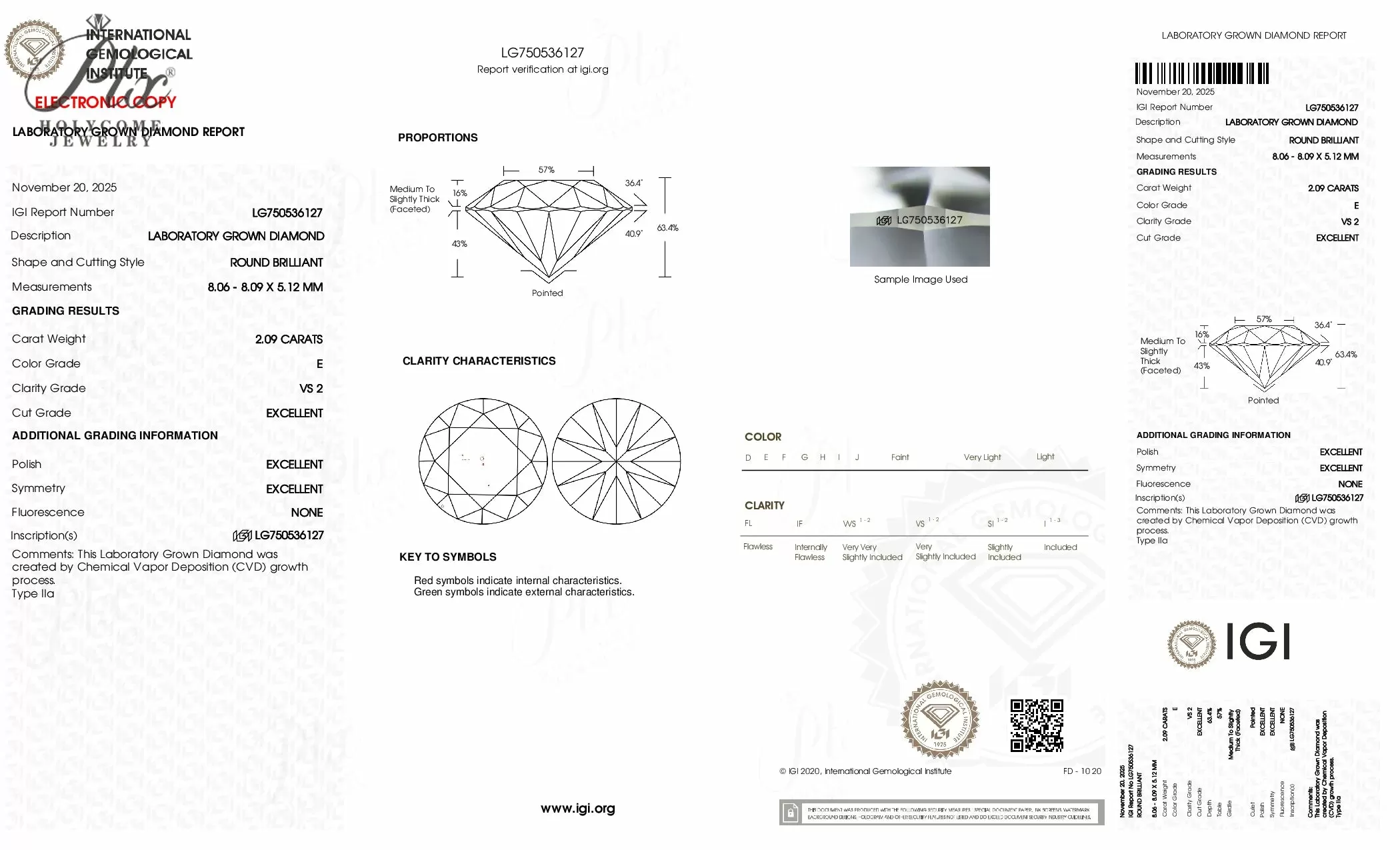
A retailer who buys loose lab-grown diamonds and has them studded locally often gets a complaint within a week: "the two stones don't look the same side by side." That complaint is almost never about the diamonds being low grade. It is about pair matching. Two individually excellent stones can look mismatched when they sit on the same earlobes. This guide explains the tolerances factories use when they sell a "matched pair" of lab-grown diamond studs.
What matching actually means
A matched pair of studs is not two stones of the same carat. It is two stones that read identical under normal viewing. That requires alignment on four axes: carat weight, color grade, clarity grade and cut grade. The retail-standard tolerance we ship to boutiques is: carat within 0.03ct of each other (so a 1.00ct pair means 0.99-1.01ct each), color within one grade (both F-G, not one F and one H), clarity within one grade (both VS-SI), and cut grade matched (both Excellent or both Very Good). Fluorescence is a fifth axis that factories sometimes skip - check it, because one fluorescent stone next to a non-fluorescent one can read visibly different in daylight. This tolerance band is tighter than what most loose-stone parcels achieve, which is why matched pairs are a separate product line rather than just two singles shipped together.
Why matched pairs cost more than loose singles
A loose 1ct lab diamond is priced per carat. A matched pair is priced higher because the factory has to pull two stones from the parcel that fall within the tolerance band. The yield on a matched pair is low - out of 20 loose stones of a given size, maybe 4 or 5 will pair cleanly. That yield loss is the pair premium, which usually runs 10-20% above two equivalent loose singles. When a quote looks unusually cheap for a "matched pair," ask whether the stones are actually matched or just two stones of similar carat shipped together. A truly matched pair will always carry a small premium, and customers who notice the difference will pay for it.
Certification: IGI paired reports
Lab-grown diamonds sold as matched pairs for studs should come with IGI paired reports - one certificate covering both stones, listing their individual weights, colors, clarities and cut grades on a single document. Single-stone certificates are acceptable for loose-stone sales but are weaker for stud earrings because the customer cannot see at a glance that the two stones are a matched set. For the 4Cs framework, see GIA's 4Cs and Wikipedia on lab-grown diamond.
Carat sizes that boutiques stock
The stud ladder we ship in matched pairs runs 0.25ct each (total 0.50ct), 0.50ct each (total 1.00ct), 1.00ct each (total 2.00ct) and 2.00ct each (total 4.00ct). The 1.00ct-each SKU is the bridal and anniversary hero. The 0.50ct-each SKU is the everyday workhorse. The 2.00ct-each SKU is the statement tier that moves on red-carpet and formalwear customers. Skip 0.10ct-each as a bulk wholesale SKU - the pair premium eats the margin and customers compare it to moissanite studs, which win on price at that size.
Setting: basket, prong and screw-back
Match the setting to the customer. Four-prong basket settings show more stone and sell as the modern default. Six-prong settings read traditional and bridal. Screw-back closures are the upsell for active customers and second-piercing wearers; they add cost but cut returns from lost backs. We list the setting type and closure on every stud SKU so you do not have to guess. Read on color consistency across LGD production.
How closely matched should lab-grown diamond studs be?
Retail-standard tolerance is carat within 0.03ct, color within one grade, clarity within one grade, cut grade matched. Tighter than that is bridal-tier; looser is fashion-tier and will draw returns.
Do matched pairs come with one certificate or two?
A properly matched pair comes with one IGI paired report covering both stones. Two separate single-stone certificates is a warning sign - ask whether the pair was actually matched or just bundled.
Why are matched studs more expensive than two loose diamonds?
Because the factory has to sort a parcel to find two stones that fall within tolerance. The yield loss (often 70-80% of stones rejected) is the pair premium, typically 10-20% above loose singles.
What carat pair sells best?
1.00ct each (2.00ct total) is the bridal and anniversary hero. 0.50ct each is the everyday workhorse. Stock both before you stock larger sizes.
Want a matched-pair stud quote with IGI paired reports? Send us the carat size and metal (925 silver, 14K white or yellow gold) and we will quote pairs with the tolerance band and certificate number listed. MOQ starts at 5 pairs per SKU. Read LGD wholesale pricing with IGI papers, compare against moissanite studs, or see our earring MOQ.
Frequently Asked Questions
Is moissanite a good diamond alternative for retail buyers?
Yes for price-sensitive customers who want brilliance and hardness. Moissanite ranks 9.25 on the Mohs scale, holds up to daily wear and costs a fraction of a natural diamond of the same size, so it resells fast in bridal and fashion lines.
What is the minimum order for wholesale moissanite?
MOQ starts at 50 pieces per design for stock items. Custom cuts and private-label settings usually start at 100–300 pieces depending on the mold.
Do you provide certificates with moissanite stones?
Yes. Every parcel ships with GRA or IGI documentation listing carat weight, color grade and cut. We recommend passing the certificate to your end customer for trust.
How long does sample and bulk production take?
Samples ship in 3–5 days. Bulk runs take 15–20 days under 500 pieces, and 25–30 days for custom work.