Moissanite Rings Wholesale Markup: Price It Right
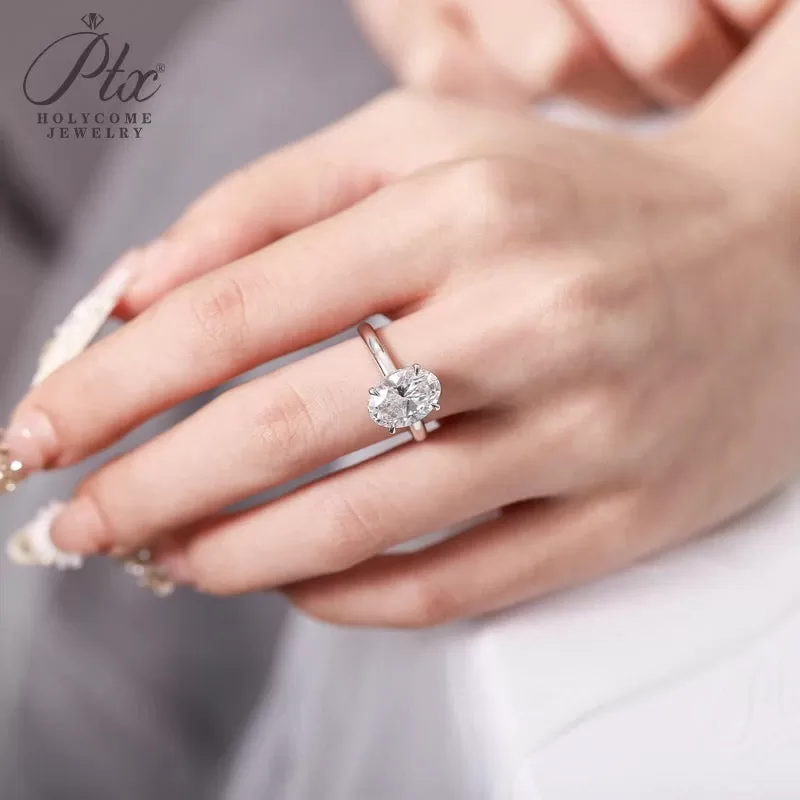
You are staring at a vendor quote: a 6.5 mm moissanite solitaire in 925 silver rhodium-plated, finished and sized US 5 through 9, at $8.40 FOB Wuzhou. The question every wholesale buyer asks before clicking place order is not whether the stone looks right, but what retail price that $8.40 lets you defend. Markup on a fashion piece and markup on a bridal piece are two different conversations, and guessing the wrong one either leaves margin on the table or prices the ring off the shelf.
The two markup floors a ring buyer should know
Silver-mounted moissanite solitaires sit in the fashion-jewelry bracket in most US and UK stores, where the conventional keystone multiplier is two to two and a half times wholesale on the ticket. That puts the $8.40 ring at $16.80 to $21.00 retail. Once you move the same stone into a 10K or 14K mount, the same ring crosses into the fine-jewelry bracket and the multiplier compresses to one point six to two times wholesale, because the customer is now comparing it against diamond and lab-grown prices on a jeweler's bench. The FTC Jewelry Guides require that the stone be disclosed as moissanite and not misrepresented as diamond, so your retail price has to stand on the stone's own merit, not on a diamond illusion.
What most buyers miss is the third floor: the online-direct price. A shopper who Google-searches the ring design before buying will see Amazon, Shein and Alibaba listings at $12 to $18 retail for the same stone. Your in-store markup only works if the customer can touch the finish, check the size and walk out wearing it. If you sell online, price the ring between the factory-direct floor and the mall jewelry counter, usually $29 to $39 for a silver solitaire, and let the GRA card, the box and the return policy justify the gap.
Where the margin actually hides
The stone itself is the cheapest line on the BOM. A loose 6.5 mm moissanite in our stock runs roughly $4.20 to $5.80 depending on cut grade and whether it is near-colorless (DEF) or the slightly greener Moissanite International tier. The mount, the plating, the sizing, the GRA card and the box add the rest. This means the biggest lever on your landed cost is not haggling the stone price by ten cents, it is consolidating the mount and finishing with one factory so you are not paying three separate markups. If you also buy loose stones, read our breakdown of sourcing moissanite rings wholesale from Wuzhou to see how loose-stone versus finished-setting pricing stacks.
Stack the math against a comparable lab-grown ticket before you commit: lab-grown diamond wholesale pricing with IGI papers on a one-carat equivalent runs $80 to $140 finished, so your moissanite ring at $8.40 cost has roughly a ten-to-one price gap to defend. That gap is your margin. It is also why a customer who can afford the lab-grown stone will not buy the moissanite ring, and a customer who cannot will not buy the lab-grown one. You are not competing with yourself; you are selling two different wallets.
Markup by mount type, in plain numbers
A workable price ladder from our current price list: 925 silver rhodium-plated solitaire, cost $8.40, retail $24 to $29, online $19.90. 10K gold solitaire, cost $42, retail $89 to $119. 14K gold solitaire, cost $68, retail $139 to $169. Halo settings add about 30 percent to the mount cost and justify a smaller markup because the halo reads as a bigger stone and customers expect to pay for visual size. Stackable 3 mm solitaires, by contrast, carry the highest multiplier in the catalog: cost $4.50, retail $19 to $25, because the ticket is low enough that shoppers buy three at once. Pair this ladder with our best-selling moissanite ring carat sizes sheet so you are marking up the diameters that actually turn.
Frequently asked questions
What is a normal markup on wholesale moissanite rings?
Two to two and a half times cost is standard for silver-mounted fashion pieces, and one point six to two times for gold-mounted bridal pieces. Anything below cost plus 60 percent leaves you no room for returns and marketing; anything above two point eight times gets shopped online within a week.
Can I price a moissanite ring the same as a diamond ring?
No. The FTC Jewelry Guides require clear disclosure that the stone is moissanite, and customers now know the price gap. Price it as a durable, brilliant, conflict-free gemstone, not as a diamond substitute. The reference on moissanite on Wikipedia covers the material properties your retail staff can quote.
Does rhodium plating add enough to justify a higher retail price?
Rhodium plating adds roughly 40 cents to 80 cents cost per ring and lets you market the piece as tarnish-resistant white. It justifies about a $2 to $4 retail uplift, not a $10 jump. Customers can tell the difference between a polished silver ring and a plated one in hand.
Should I mark up halo solitaires more than plain solitaires?
No. Halo settings cost more to make but read as larger stones, so customers expect a smaller multiplier. A 6.5 mm center halo with side stones costs about 30 percent more to build and should retail for roughly 20 percent more, not 50.
We publish a tiered price ladder for silver, 10K and 14K mounts on every quote, with the suggested retail range filled in so you do not have to back into it. Send us your store format (brick-and-mortar, online, or both) and your average ring ticket, and we will send a marked-up price list, a sample of one silver and one 14K solitaire, and a GRA card pack within two working days. While you plan your next PO, compare wholesale silver ring band widths and read our notes on ring size distribution for US 5 through 9.